


Ukraine’s Brave1 Announced Grants for Military Humanoid Robots in July; Amounts and Terms Remain Unclear

Brave1, Ukraine’s government-backed defense-technology cluster, announced a grant competition for developing humanoid robots for the Armed Forces, Militarnyi reported on July 2, 2026 from the Brave1 Advantage event, where Brave1 chief executive Andriy Hrytsenyuk made the announcement. Ukraine’s Ministry of Defence listed humanoid robots among the areas for new “breakthrough” grant competitions in its summary of the event, dated July 1.
Stated goals
According to UNITED24 Media, the aim is to “robotize as much of the first line of contact as possible and reduce risks for Ukrainian service members.” Militarnyi reported that the program is “geared exclusively toward defense needs and military application scenarios” and that developers are expected to start with simpler platforms and add functions over time. Euromaidan Press, citing Tech Times, described the grants as being for domestic developers of two-legged robots; Militarnyi and the Ministry of Defence did not specify bipedal designs.
How much money
The ministry described the funding in two different ways:
- July 1: developers in the new competitions “will be eligible to receive” “more than UAH 100 million per project,” in areas including UAV-launched missiles, systems for countering glide bombs, humanoid robots, Ukrainian radars, microwave strike systems and laser air defense.
- July 13: Brave1 would “soon announce new grant competitions with total funding of more than UAH 100 million” for humanoid robots, aerial buggies, glide-bomb countermeasures, laser air defense and Ukrainian-made radars.
UAH 100 million is about $2.4 million. No outlet Lens read gave a humanoid-specific amount, a number of awards or a deadline.
Where it stands
As of November 12, Brave1’s grants website lists two launched breakthrough competitions, for air-to-air missiles (up to UAH 75 million per project) and Ukrainian radars (up to UAH 100 million per project), and no humanoid-specific competition. Humanoids appear in the general grant program among ground robots of non-standard form factors, funded at up to UAH 500,000, 2 million, 4 million or 8 million depending on readiness. Lens found no report of humanoid grant applicants or recipients.
Other items on the July list
The ministry’s July 13 announcement also covered an updated main program with 53 new priorities, at UAH 500,000 to UAH 8 million per project, and a BraveTech EU program of up to UAH 8 million per project whose priorities include exoskeletons, evacuation drones and anti-bunker munitions.
Context
Ukraine’s Ministry of Defence said on July 8 that it had codified and authorized 67 new ground robot models in the first half of 2026. Euromaidan Press reported that none of them were two-legged; the ministry release does not address that. At the time of the announcement, Militarnyi noted that the US startup Foundation had delivered Phantom MK-1 humanoids to Ukraine for evaluation, and wrote that current humanoids are “heavy and expensive, require regular recharging, are prone to breakdowns, and often lose their balance.”
Related: Foundation’s Phantom humanoids in Ukraine and its Pentagon research agreements; Mykhailo Fedorov’s “Army of Robots”.
Sources and notes
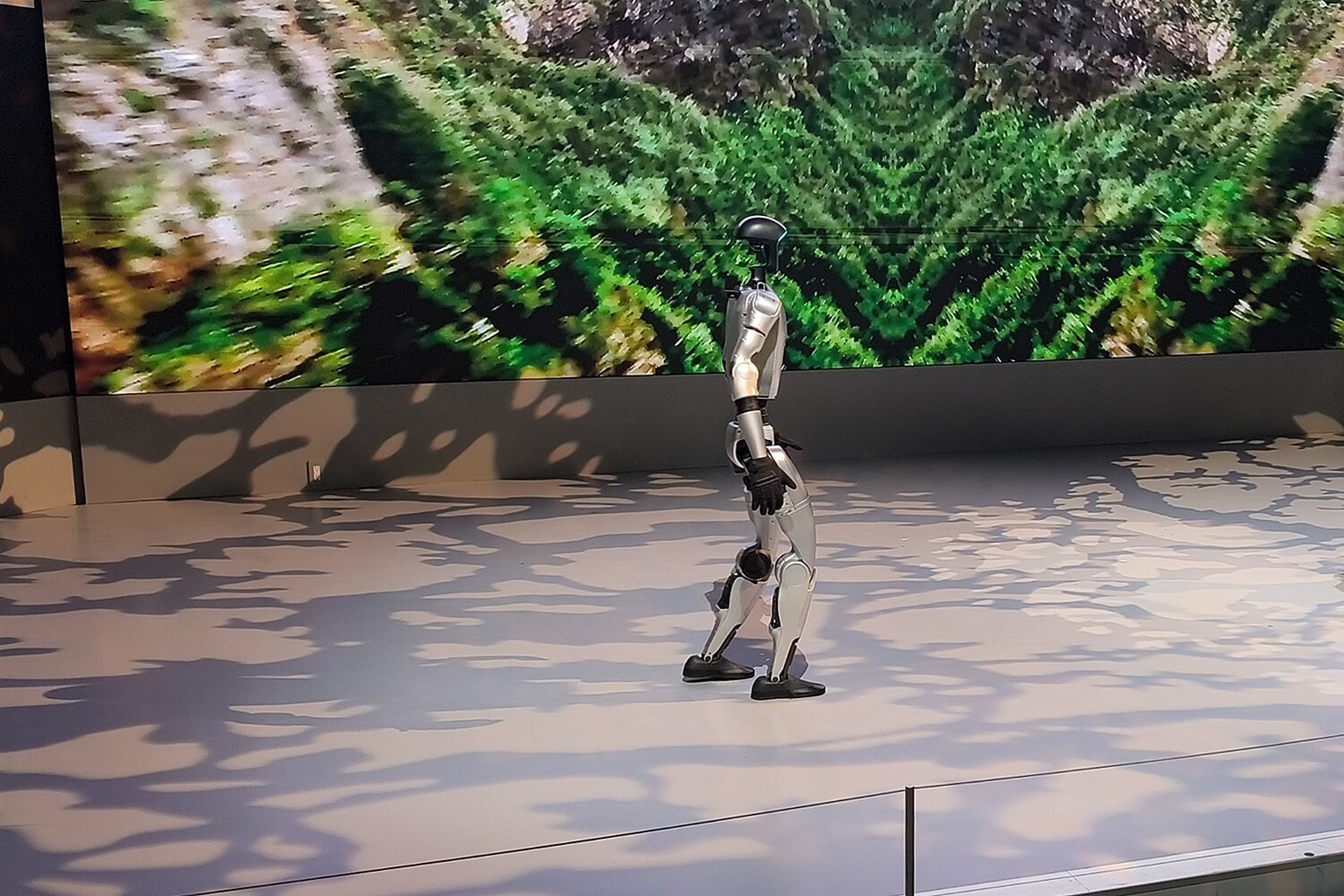
Sources: Militarnyi, July 2, 2026; UNITED24 Media, July 2; dev.ua, July 2; The Defense Post, July 3; Ministry of Defence of Ukraine, July 1, July 8 and July 13; Euromaidan Press, July 12 and July 13; Brave1 grants site, read November 12. Notes: Militarnyi reported Hrytsenyuk’s remarks in indirect speech; his name is also spelled Hrytseniuk. Lens did not read Tech Times, TechRadar or Censor.net. Euromaidan Press’s description of Ukraine as the first state to fund combat humanoids as a separate category comes from Tech Times and was not checked. Thumbnail photo: a two-legged humanoid robot walking across a stage at the Japan Mobility Show 2025 in Tokyo, by RuinDig/Yuki Uchida, CC BY 4.0, via Wikimedia Commons; cropped and slightly enlarged. Illustrative stand-in: the robot is a commercial model with no link to Brave1.
Image: RuinDig/Yuki Uchida (CC BY 4.0), via Wikimedia Commons.

