


Hegseth Issues ‘Corrected Copy’ of Counter-Drone Approval Memo Dated 5 November, DefenseScoop Reports; Change Described Is to Legal-Counsel Language

Defense Secretary Pete Hegseth has issued a “corrected copy” of the counter-drone guidance first made public on 2 October 2026, DefenseScoop (Brandi Vincent) reported on 10 November. DefenseScoop viewed a five-page memo dated 5 November, and an anonymous source familiar with the document confirmed it. Pentagon spokespeople did not respond to questions about what prompted the change. Lens found no other outlet reporting the correction and no public copy of the corrected memo.
What DefenseScoop says changed
A footnote indicates that the latest version removes language referring to a deputy general counsel for DRPM programs in paragraphs 3 and 4 on page 4. DRPM stands for Direct Reporting Portfolio Manager; DefenseScoop calls the unmanned-systems office, DRPM-UxS, nascent. The removed text included the sentence “JIATF-401 is part of the UxS DRPM established in June of 2026,” which DefenseScoop quotes as the earlier wording; a statement that the Office of the General Counsel has a deputy general counsel for DRPM programs to coordinate legal assistance; and a line that a fielding review would be coordinated with that deputy. In the corrected copy, components forward completed legal reviews to the Office of the General Counsel through the legal adviser of Joint Interagency Task Force 401 (JIATF-401), the Pentagon’s coordination hub for counter-drone employment, which Hegseth created by memo in August 2025. DefenseScoop describes only these legal-counsel changes. It does not say whether anything else changed, names no services or combatant commands, and gives no timelines.
What the memo requires, as DefenseScoop describes it
According to DefenseScoop, senior Pentagon and military officials must record any delay or denial of a request to employ counter-drone capabilities as a “risk of inaction” and report those cases to JIATF-401. DefenseScoop quotes Hegseth in the memo: “Protection against the threat of drones will not be delayed by self-imposed restrictions,” and “Small unmanned systems are the defining threat of our time.” It attributes the push to a recent surge in unauthorized drone incursions over US military bases and sensitive sites, citing unnamed reports.
The original memo, as reported in October
Lens could not open the original memo, which appears to be posted on media.defense.gov and returned HTTP 403, so the following comes from coverage of it. DefenseScoop and Defense Daily date it 28 September 2026 and say it was made public on 2 October. DefenseScoop reports that it directs the creation of a single department-wide approval process to cut authority-to-operate timelines for tested systems from months to days or weeks, without a fixed deadline, and asks the Defense Department’s chief information officer to review within 30 days how components submit counter-drone spectrum requests. Unmanned Airspace and Defence Industry Europe report that requests left without action for 30 days are escalated to the secretary’s office and that legal reviews should generally take about 10 days after the required information arrives; Defence Industry Europe adds that services may not repeat a weapons-safety review for an unchanged system, configuration and use case. Unmanned Airspace, quoting the department, says any denial must be documented with a rationale and sent to JIATF-401 and every approval barrier needs a designated owner, timeline and escalation path, and that the memo does not change existing operational counter-drone policies or authorise violations of law. Hegseth wrote in the memo: “The Department will take down barriers so our warfighters can take down drones.” Army Lt. Col. Adam Scher, a JIATF-401 spokesperson, told DefenseScoop: “JIATF-401 will not accept a slow-moving bureaucracy when faced with a fast-moving threat.”
How it differs from the 9 November agreement
The memo is internal Pentagon guidance on buying, approving and fielding counter-drone systems. The agreement Lens covered in an earlier post is an interagency memorandum of understanding among the departments of Defense, Transportation, Homeland Security, Energy and Justice, with an FAA safety-risk review. DefenseScoop’s article on the agreement does not say it implements the memo.
Sources and notes
Sources, read through summaries: DefenseScoop (Brandi Vincent) on 10 November, 2 October and 9 November 2026; Unmanned Airspace (Kylie Bielby, 5 October); Defence Industry Europe (Martin Chomsky, 2 October); The Defense Post (Ethan M. Encarnacion, 14 October); and The War Zone (Howard Altman, 29 August 2025) on JIATF-401’s creation. Defense Daily’s article is paywalled and The Hill’s returned HTTP 403. The 10 November DefenseScoop page shows no date itself; Lens took it from the URL and the article’s reference to viewing the memo on Tuesday. DefenseScoop does not say why the memo was corrected or where the earlier language was published. Sources disagree on who has the 30-day task to set up a department-wide process: DefenseScoop gives the chief information officer a 30-day spectrum review and the chief digital and AI officer an approval-process task with no deadline, while Defence Industry Europe gives the chief digital and AI officer 30 days. DefenseScoop calls the department the Defense Department or Pentagon and Hegseth the Defense Secretary, while Unmanned Airspace, Defence Industry Europe and, according to search results, the memo’s letterhead and file title say Department of War and Secretary of War; this post uses DefenseScoop’s terms.
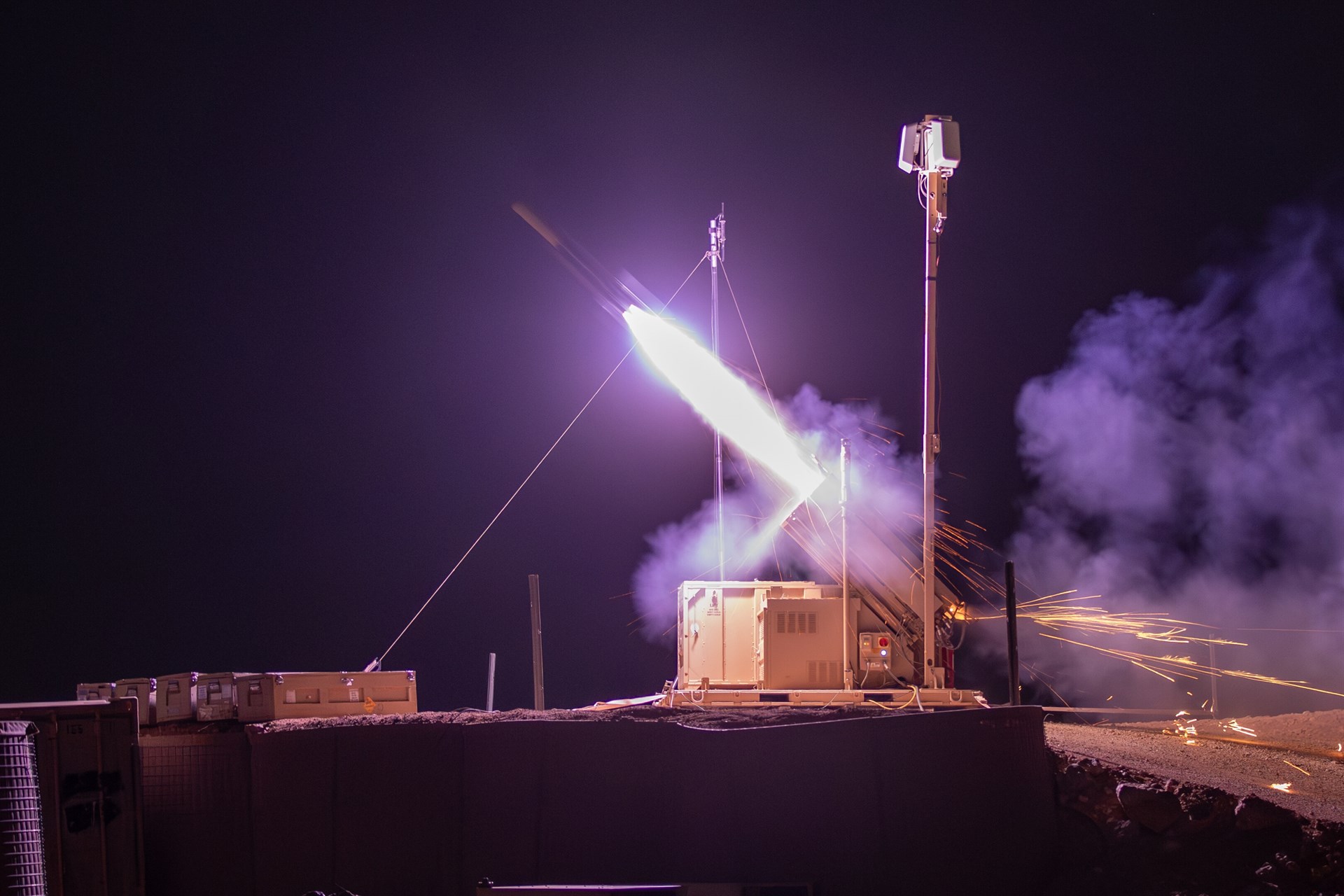
Image: A Coyote Block 2C counter-drone interceptor launching during a base-defense exercise at Al-Tanf Garrison, Syria, 12 March 2025. Photo: US Army, Staff Sgt. Fred Brown, public domain, via Wikimedia Commons; cropped. Stand-in image of a different counter-drone system; it does not show a system named in the memo.

