


Vessel Emerges From Stealth With $5 Million Seed Round Led by HG Ventures to Route Excess Inventory to Donation

Vessel announced on 9 November 2026 that it is emerging from stealth with a $5 million seed round, according to a Business Wire release dated that day at 9:00 a.m. Eastern, which Lens read through a mirror on FinancialContent. The round was led by HG Ventures, with Flex Capital, Ford Street Ventures and I2BF Global Ventures also investing. The release does not state a valuation, a total raised or how the money will be used. Lens could find no independent coverage that it could open, so almost everything below is the company’s own account.
What Vessel does
The release describes Vessel as a “services-as-software” company based in New York. Its platform, called GoodOS, vets nonprofit recipients, coordinates freight with door-to-door monitoring and documents each delivery for finance and sustainability teams, for brands in beauty, personal care, health, medical supplies and raw materials. Brands approve every match, and only recipients cleared by human experts receive “Vessel Certified” status. The release says donating costs less than destroying excess goods, and the company’s description says each order is guaranteed not to cost more than destroying the goods. Co-founder and chief executive Teddy Raskin said: “We built Vessel so that brands no longer have to choose between doing what’s right for their business and what consumers expect.” Tommy Pennington is co-founder and chief technology officer. Raskin’s earlier company, KOA Supply, now Cato Healthcare Supply, was acquired in 2024, according to the release, which also names advisers Debra Perelman, former president and CEO of Revlon, Pamela Gill Alabaster, former chief sustainability officer at Kenvue, and Jeffrey Wolpov, senior vice president of e-commerce at Ryder System.
Company claims
These figures come from the release and have not been independently verified. The company says that during its stealth period it donated more than $83 million in products to reach more than 5.5 million people and kept more than 2,000 tons from landfills or incineration, with clients including Sol de Janeiro and Smashbox; a Smashbox pilot in Los Angeles moved 10,440 products to 5,544 people. It estimates annual excess-inventory waste at $163 billion, linking to an Avery Dennison release that Lens did not open, and says redirecting 1% would exceed $1.6 billion in products. It says GoodOS analyzes more than 550,000 nonprofits and more than 160 million data points, and describes two unnamed cases: a top-three medical distributor that donated more than 16 million syringes, and a global food and agriculture company that sent more than 250,000 soap bars to programs in Tanzania, Nepal and Madagascar. It says Vessel was one of 45 companies selected for Cohort 7 of the 100+ Accelerator.
Sources and notes
Sources: the Business Wire release of 9 November 2026 as mirrored on FinancialContent (the businesswire.com address returned an access error) and the TechStartups roundup of 10 November. The CityBiz, FinSMEs and Dealroom reports on the round could not be opened, and Lens did not find Vessel’s own website. The release is the only source for the figures above, including the 2,000-ton and $163 billion statistics. Other companies share the name Vessel, and none of them is the subject of this round.
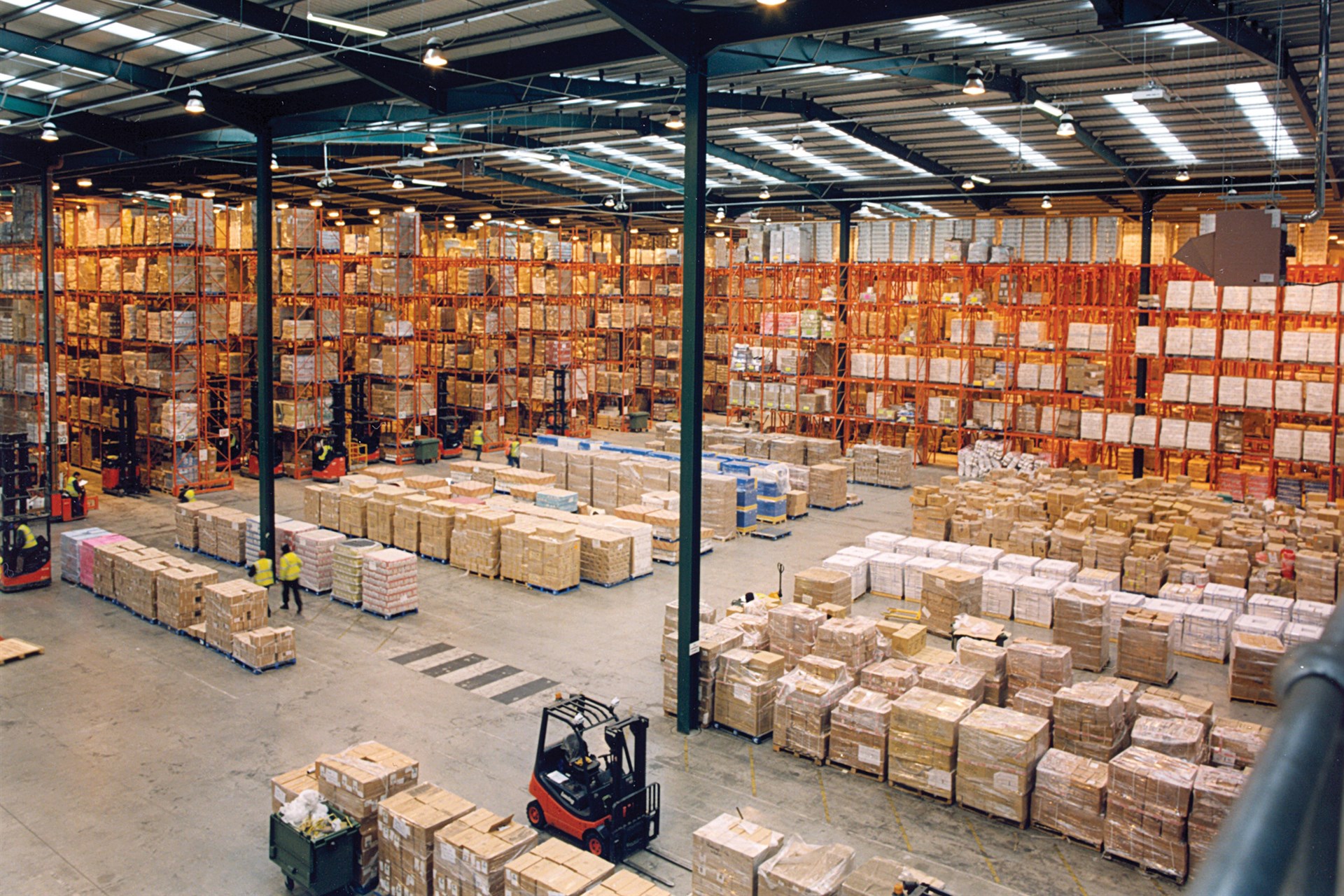
Image: A warehouse with tall orange pallet racking, shrink-wrapped pallets and a forklift, seen from a gallery. Photo: Axisadman, CC BY-SA 3.0, via Wikimedia Commons (file record dated 2007). Stand-in image; it does not show Vessel or its partners.

