ULA Vulcan Fails to Reach Orbit, Losing 40 Amazon Leo Satellites; Cause Not Yet Public
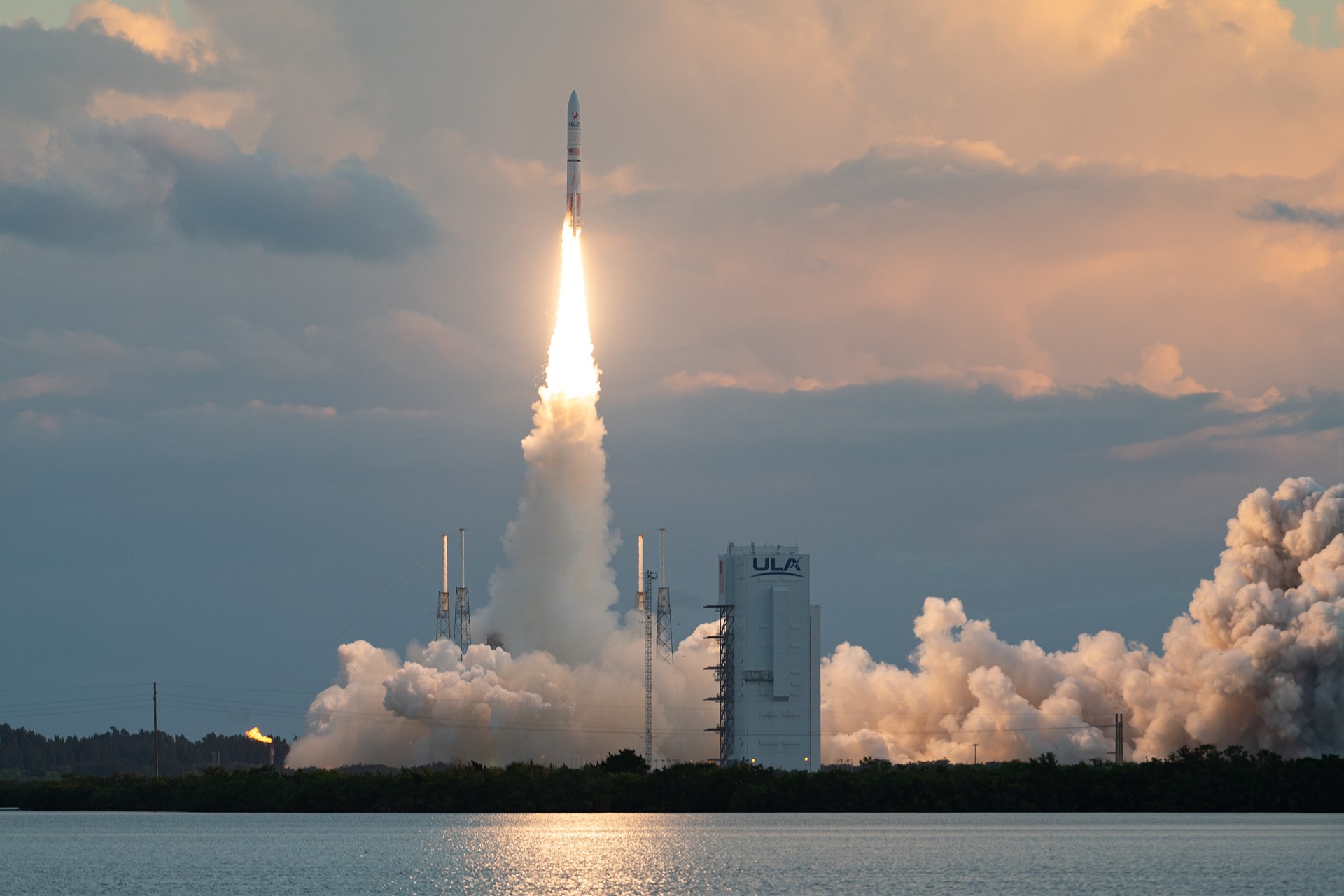

United Launch Alliance (ULA), owned by Boeing and Lockheed Martin, said on Sunday 15 November 2026 that its Vulcan rocket suffered an anomaly (an unexpected problem) about 10 minutes into flight and failed to deliver 40 Amazon Leo internet satellites to orbit, per CBS News and Spaceflight Now. As of 16 November 2026, the cause has not been made public.
What happened on 15 November
According to CBS News and Spaceflight Now, Vulcan lifted off at 12:40 p.m. Eastern Time (17:40 GMT) from Space Launch Complex 41 at Cape Canaveral Space Force Station in Florida. A Friday attempt was scrubbed after a nitrogen plant outage, and a Saturday delay followed network problems between the rocket and ground systems. On Sunday, controllers held the countdown at 20 seconds for an unexplained technical issue before launching at the end of the window. Spaceflight Now wrote that it is not known whether that issue played any role.
In reports by William Harwood, CBS News and Spaceflight Now wrote that the six solid-fuel strap-on boosters separated about 1 minute 40 seconds after liftoff and appeared to work normally. They wrote that the first stage appeared to burn longer than ULA’s pre-launch timeline and to separate from the Centaur upper stage later than expected. The Centaur is the stage that carries the payload to orbit. A telemetry animation showed it making unusual orientation adjustments early in its planned 12 minute 15 second burn.
About 50 minutes after liftoff, ULA posted a statement on X. Space.com quoted it: “Based on data received by our Launch Director, we confirm that the Vulcan vehicle launched from Space Launch Complex 41 suffered an anomaly 10 minutes into the flight and failed to deliver the Amazon mission to orbit.” ULA said it has no specific data yet and will work with Amazon and other organizations to find the cause and return to flight as quickly as possible.
Amazon Leo, Amazon’s satellite internet service, said on X, per Anadolu Agency and GeekWire: “ULA has been a trusted partner for Amazon, and we believe they’ll learn from this mission and deliver on their long-term plans for Vulcan.” NASA Administrator Jared Isaacman wrote on X that NASA is available to assist with the investigation, per CBS News.
Background figures
- CBS News and Spaceflight Now wrote that Sunday was the fifth Vulcan flight, the first in nine months, and the first complete failure of a ULA rocket since the company formed in 2006.
- Vulcan’s solid boosters had nozzle problems on two earlier flights, in 2024 and February 2026, per CBS News. The US Space Force paused Vulcan launches of national security payloads afterwards.
- Sunday was the first of 38 Vulcan launches Amazon has bought, per CBS News. Amazon also booked launches on New Glenn (grounded since a May explosion), Ariane 6 and Falcon 9.
- Amazon’s mission updates page lists the next Leo launch as an Ariane 6 flight with 36 satellites, no earlier than 23 November 2026, from French Guiana.
Investigation and customers
Spaceflight Now wrote that Vulcan faces a potentially significant grounding while engineers review telemetry. Lens found no formal grounding announcement. The Next Web, citing Reuters, reported that a person familiar with the matter said Blue Origin, maker of Vulcan’s BE-4 first-stage engines, is working with ULA on the investigation, and that the Pentagon had not yet cleared Vulcan to resume national security launches pending Sunday’s result. SpaceNews said it updated its report with Space Force comments, which Lens could not read.
Where reports differ
- Where the fault began. Spaceflight Now and CBS News describe a long first-stage burn, a late separation and an anomaly during the Centaur burn, per ULA’s update. The Next Web, citing Ars Technica, reported that several sources said the problem was in the booster stage, not the Centaur or the solid boosters, and that the two BE-4 engines kept firing at least 30 seconds past their planned shutdown, after which a telemetry animation showed the rocket starting to spin. Citing Reuters, it wrote that it was unclear whether the BE-4 engines played a role. ULA has named no component.
- Friday scrub. CBS News and Spaceflight Now give a nitrogen plant outage. Engadget gives a refuelling issue.
- Satellites launched before Sunday. GeekWire gives 396 on 14 missions. CBS News says a successful flight would have brought the total launched to 436, which implies 396 (Lens arithmetic). Space.com gives about 400 on 15 launches, and Amazon’s page says nearly 400 on 14 missions.
Sources and notes
Lens read in full CBS News (updated 15 November 2026), Spaceflight Now (15 November), Space.com (15 November), Engadget (15 November), GeekWire (15 November), The Next Web (16 November) and Anadolu Agency (15 November). Amazon’s mission updates page was read through a summarizing tool, so its wording is paraphrased. SpaceNews is behind a registration wall and only its headline and photo caption could be read. ULA’s and Amazon’s posts on X were read through the outlets above, not on X. Reuters and Ars Technica could not be opened by Lens, so their reporting is known only through The Next Web.
Image: A United Launch Alliance Vulcan rocket lifts off from Space Launch Complex 41 at Cape Canaveral Space Force Station, Florida, on 4 October 2024, on its second certification flight for the U.S. Space Force. Photo: Airman 1st Class Collin Wesson, U.S. Space Force (public domain), via Wikimedia Commons; cropped. Archive photo from 4 October 2024: it is not from the events described.