


Ukraine’s Third Army Corps Says Its Drones Dropped Armed Ground Robots More Than 10 km Behind Russian Lines
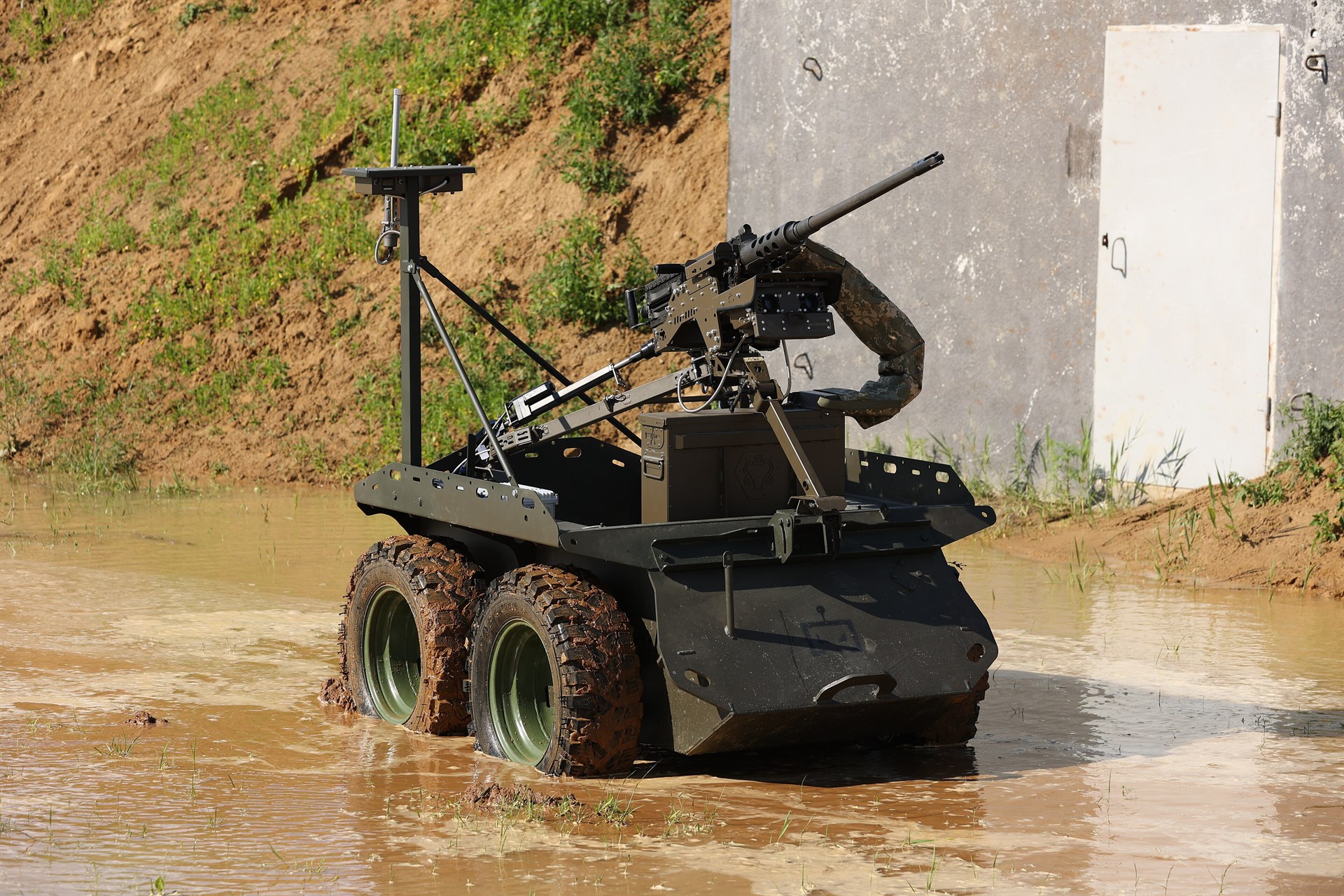

Ukraine’s Third Army Corps said its heavy bomber drones carried armed ground robots and released them more than 10 kilometers behind Russian lines during Operation Vivaldi, a counteroffensive in the north of Donetsk region, according to Ukrainska Pravda and the Kyiv Post on September 20, 2026, which relayed the corps’ Telegram post. The corps described itself as the first in the world to air-drop unmanned ground systems. Lens found no independent verification of the drops.
What the corps said
Ukrainska Pravda quoted the corps: “Heavy bombers of the 3rd Army Corps dropped ground kamikaze robots deep into enemy territory.” The Kyiv Post quoted the corps commander, Brig. Gen. Andriy Biletsky: “Our heavy bomber drones deliver kamikaze robotic platforms more than 10 kilometers into the enemy’s rear.” UNITED24 Media reported on September 21 that the drones belonged to the Third Assault Brigade and that the drops took place during the operation’s second phase.
On September 25, UNITED24 cited a corps report of September 24 saying the robots were strike ground vehicles of NC13, the brigade’s robot strike unit, called “Gryphons” after Hryhorii Bach, an NC13 machine gunner with that call sign who has been missing since the fighting for Andriivka in 2023. A UNITED24 article of September 29 uses the name “Griffin” for the brigade’s method of carrying robots under drones and releasing them, not for a robot model; DroneXL and DigitalToday use the name for the robot.
Weapons and distance
- The corps called the robots “kamikaze” ground platforms; Newsweek’s rendering of Biletsky’s statement says “suicide ground drones.”
- UNITED24 reported on September 27, citing a corps statement that day, that NC13 robots each carried two Bullspike grenade launchers, fired on Russian positions, then drove into shelters and detonated. UNITED24 said that statement did not say those robots had been air-dropped.
- Distances differ: “more than 10 km” (the corps and Biletsky, via several outlets); “up to 10 kilometers” (NC13 commander Mykola Zinkevych to Suspilne, via UNITED24 on September 29); 19 km for the deepest drop (a battalion commander with the call sign “Darwin,” via DroneXL citing The Telegraph); 15 to 20 km (dev.ua, October 23).
- No outlet Lens read named the maker of the robots or the model of the carrier drone.
What the unit commander said
Zinkevych, whom UNITED24 identifies as commander of the NC-13 strike unit, told Suspilne: “We deploy the UGVs up to 10 kilometers behind enemy lines and then continue moving under their own power.” He also said, according to UNITED24, that unmanned ground systems carried out 80% of logistics during all stages of Operation Vivaldi and 90% of casualty evacuations by units of the Third Army Corps. These are the unit’s own figures.
Limits raised
- Viktor Pavlov, described by Charter97 (relaying RBC-Ukraine) as an officer of a 3rd Mechanized Brigade drone battalion, said the method is “suitable primarily for overcoming obstacles that UAVs cannot cross on their own” and is “more of a point solution than a systemic approach,” citing limits including the carrier drone’s payload.
- Darwin told The Telegraph, as relayed by DroneXL: “The most difficult part is to reach the point where you should lift the drone,”
- Newsweek quoted RBC-Ukraine as saying that air delivery of ground robots is not new, “but it is the first time it has been used for kamikaze unmanned ground robotic systems over such a distance.”
The operation
Biletsky made the counteroffensive public on September 15 after a news blackout, the Kyiv Independent reported. Euromaidan Press reported that he named it after Vivaldi’s Four Seasons, with four phases. The corps’ figures include more than 3,000 Russian casualties (UNITED24, Euromaidan Press, Kyiv Post) and a recaptured area that rose from about 125 square kilometers in late September to 176 (Kyiv Independent, October 8) and 277 (dev.ua, October 23). The Kyiv Post said DeepState confirmed the liberation of Shandryholove and Derylove; the other figures are the corps’ own.
An earlier report
In July, Militarnyi and UNITED24 reported on footage, first posted by a Russian Telegram channel on July 19, that reportedly showed a large Ukrainian hexacopter carrying an ARK-1 ground robot on a cable; the Russian source said it carried anti-tank mines. UNITED24 said Ukrainian officials had not commented. LIGA.net, relaying Forbes on August 4, described an ARK-1 delivered deep into the Russian rear.
Related: Ukraine’s 92nd Brigade says a heavy drone flew a wounded soldier off the front line; DevDroid says its ground robots trained with the Italian Army.
Sources and notes
Sources: Ukrainska Pravda, September 20, 2026; Kyiv Post, September 20, 2026; UNITED24 Media, September 21, September 25, September 27 and September 29; Euromaidan Press, September 21; Charter97, September 21; Newsweek; DroneXL, September 27; Kyiv Independent, October 8; dev.ua, October 23; Militarnyi, July 19; UNITED24, July 20; LIGA.net, August 4. Notes: the corps’ Telegram posts were read only as relayed by these outlets, and outlets date the announcement September 20 or 21. Lens did not read The Telegraph, the original RBC-Ukraine article or Forbes. Charter97 places Pavlov in the 3rd Mechanized Brigade, while an earlier Ukrainska Pravda item names a Viktor Pavlov in the 3rd Separate Assault Brigade; Lens could not establish whether this is the same person. Newsweek’s page says the article was produced with an AI assistant. Casualty, territory and percentage figures are Ukrainian military claims. Thumbnail photo: a Ukrainian “Zmiy” wheeled ground robot carrying a Browning M2 machine gun during acceptance trials in July 2025, by Serhii Yurtaaa, CC BY 4.0, via Wikimedia Commons; cropped. Illustrative stand-in: it does not show the robots or drones used in Operation Vivaldi.
Image: Serhii Yurtaaa (CC BY 4.0), via Wikimedia Commons.

