


UK competition regulator opens investigation into Meta’s terms for publishers

Britain’s Competition and Markets Authority (CMA) opened an investigation on October 30 into whether Meta is abusing a dominant position through new commercial terms that would let the company collect content from publishers’ and businesses’ websites for its own products, including artificial intelligence. The case is brought under Chapter II of the Competition Act 1998. The regulator says no decision has been made on whether the law has been broken and that no one should assume it has.
The investigation is the most formal step so far in a two-week dispute that began when Nieman Lab reported on October 15 that Meta’s updated terms would allow broad scraping of websites linked to business accounts. Meta has since moved the start date and then paused the rollout pending consultation, and a Norwegian court has barred it from applying the changes while their legality is examined.
What the CMA is investigating
According to the CMA’s announcement, the authority will first assess whether Meta holds a dominant position in a relevant UK market. If it does, the CMA will then assess whether Meta’s current terms, or revisions to them, amount to an abuse of that position. The CMA’s stated concern is that requiring news publishers and other content businesses to accept the terms could be an unlawful imposition of unfair trading conditions affecting thousands of UK businesses.
The CMA says it opened the case after hearing concerns from the UK’s News Media Association and from Movement for an Open Web, a UK nonprofit group. Its case page names Meta Platforms, Inc., Facebook UK Limited and Facebook Ireland Limited as the businesses under investigation, and says other Meta group entities may also be involved.
The case page sets an indicative timetable of October 2026 to January 2027 for initial information gathering, with engagement from Meta and third parties. After that, the CMA may close the case, or, if it provisionally finds an infringement, issue a statement of objections that gives the parties a chance to respond before any final decision. The CMA describes these dates as indicative.
Chief executive Sarah Cardell said in the announcement that the authority had heard concerns from news publishers and other businesses and was “acting swiftly to investigate.” The release does not mention fines. PPC Land notes that the Competition Act allows penalties of up to 10 percent of worldwide turnover, but that figure is a statutory ceiling and not a forecast of any outcome.
What Meta’s terms say
The terms apply to businesses that use Meta’s platforms and services. According to the CMA, they could let Meta collect content from business and publisher websites and use it to build its own products, including AI features, without those businesses having a say over whether or how their content is used. Press Gazette reports that the clause covers content whether or not it was ever published on a Meta platform, and that it applies to any publisher with a Facebook or Instagram business account.
Nieman Lab reported that on October 16, after the first reports, Meta removed the word train from the terms and limited future use of scraped content to advertising and business products. Publishers argue that the replacement wording, which covers using content to develop, improve and research those products, still reaches generative AI. A US media lawyer told Press Gazette he reads the word develop as broad enough to include training.
Meta disputes the complaints. In an October 22 response to the Movement for an Open Web complaint, as summarized by PPC Land, the company said its crawling terms apply only to its ads and business products, that the update does not change how it uses web crawlers, and that publishers can still use robots.txt files to signal their preferences. Press Gazette and Nieman Lab both note that the commitment to respect robots.txt is not written into the revised terms.
How the dispute unfolded
The terms were due to take effect on October 30. At a parliamentary committee hearing on October 20, Will Hayter, the CMA’s executive director for digital markets, said the regulator had written to Meta and arranged a meeting with the company, according to Press Gazette and Nieman Lab. Cardell said the CMA had heard about the change the previous week and had engaged with Meta directly, but that it had no live designation for Meta under the UK’s digital markets regime, which limited its options.
Publisher groups escalated in the days that followed. The US-based News/Media Alliance, which says it represents more than 2,000 publishers, sent Mark Zuckerberg an open letter on October 22 asking Meta to withdraw the terms and requested a public answer by October 26, according to Nieman Lab. German publisher associations and four European press groups separately wrote to the European Commission, arguing the terms breach or may breach the EU’s Digital Markets Act.
On October 23, The Next Web reported, citing Reuters, that Meta had moved the start date from October 30 to November 20. A Meta spokesperson said, according to The Next Web, that the delay gave the company time to explain what was changing. The CMA’s release credits Meta’s engagement with the regulator for the delay. On October 28, Andy Stone, Meta’s vice president of communications, said Meta would not change its policies without full consultation with industry groups, that the consultation could run past November 20, and that existing terms would stay in place until then.
Norway and France add pressure
On October 27, the Norwegian Media Businesses’ Association asked the Oslo District Court, on behalf of ten media companies including the broadcaster NRK, Schibsted and Amedia, for an interim injunction against the terms. According to PPC Land, citing AFP, the court issued an order on October 28, on an emergency basis and without hearing from Meta. The order bars Meta from applying the changes until the courts decide whether they are lawful.
The association says the court agreed that Meta is dominant and that the new terms are unreasonable. Those are the claimants’ own summaries: the written decision has not been published, so the court’s reasoning cannot be checked and Meta’s arguments have not been tested. It is also unclear from the published material whether the order covers only the ten applicants or all Norwegian media. Press Gazette reports that Meta says its existing terms remain in place.
In France, Euronews reports that the Paris Court of Appeal on Thursday, October 29, rejected Meta’s attempt to overturn a July order requiring it to negotiate in good faith with French media over neighboring-rights payments. That July order came from France’s competition authority, the Autorité de la concurrence, which said Meta’s conduct had caused serious and immediate harm to the press sector and was likely an abuse of a dominant position, according to Euronews’s report at the time. Meta’s agreements with the two complaining publisher groups lapsed in December 2024 and January 2025. A Meta spokesman told Euronews the company was disappointed by the ruling and was considering its next steps.
Euronews also reports that more than 340 news sites, including the Guardian, the New York Times and USA Today, have blocked web crawlers since May 2026 to keep their content out of AI training data. That count could not be confirmed from a second source.
Meta’s response and wider legal exposure
A Meta spokesperson told Euronews that the company has already committed not to change its terms without consulting publishers and other stakeholders, and added: “We welcome the opportunity to explain our approach to the CMA.” The CMA’s release does not include a Meta statement, and PPC Land reports that Meta did not immediately respond to requests for comment on the investigation, citing Reuters.
The CMA is also handling a separate matter. It is seeking information about Meta One, a business subscription service, after the Federation of Small Businesses raised concerns about posting external links on Facebook and Instagram without paying. The CMA says no decision has been taken on formal action there and that the matter sits outside the new investigation.
The publisher dispute comes while Meta faces litigation over other issues. Euronews reported on October 28 that Meta and Snap are set to face a Los Angeles jury, with opening statements scheduled for November 4, unless more settlements are reached. The plaintiffs allege that compulsive use of the apps harmed their health. Meta denies the claims. Euronews also reports that in August Meta agreed to pay more than $18 billion in penalties and to make teen-safety changes, in a settlement with 52 state attorneys general. Those figures come from Euronews alone.
What to watch
The CMA has not designated Meta as having strategic market status under the digital markets regime, which the CMA says limits its powers under that regime, and PPC Land reports that this is why the Competition Act route was used. According to the CMA, its next set of designation proposals under that regime goes to its board in spring 2027. The News Media Association has urged the CMA to make Meta the primary candidate for the next such investigation and has argued the regulator could act faster under that regime, according to Press Gazette. This suggests the Competition Act case and any later designation are separate tracks, and that the end of the initial information-gathering phase in January 2027 is the first point at which the CMA may signal whether it will go further.
Other dates are set. The terms’ nominal start date remains November 20, although Meta has said consultation could push it back. The European Publishers Council has asked the European Commission to act before that date, according to PPC Land, and none of the sources reviewed reports a Commission decision. In the United States, opening statements in the Los Angeles trial are set for November 4. This suggests that whether Meta rewrites the clause, as publishers are asking, or lets the consultation run past November 20 could shape how much remains for the CMA to investigate.
Sources
- GOV.UK (CMA): CMA opens investigation into Meta’s commercial terms, October 30
- GOV.UK (CMA): case page, suspected abuse of a dominant position in relation to Meta’s commercial terms
- Euronews: UK probes Meta over ‘exploitative’ new terms for media as global pushback mounts, October 30
- Press Gazette: UK competition watchdog opens investigation into Meta scraping terms, October 30
- PPC Land: Meta faces UK probe over planned terms to use publishers’ content for AI, October 31
- Press Gazette: UK competition chief ‘very alive’ to risks from sweeping Meta scraping change, October 21
- Nieman Lab: Publishers pressure Meta to nix new terms that would let it scrape their websites, October 22
- Nieman Lab: Meta pledges to consult publishers before finalizing its new terms, October 28
- The Next Web: Meta delays its website-crawling terms after a publisher backlash, October 23
- PPC Land: Norwegian court temporarily blocks Meta’s new terms after 10 media groups sue, October 28
- Press Gazette: Norwegian media companies win initial court ruling against Meta’s AI scraping terms
- Euronews: French watchdog orders Meta back to press payment talks after copyright deals expire, July 8
- Euronews: Social media on trial again, Meta and Snap face jury over alleged harm to teens, October 28
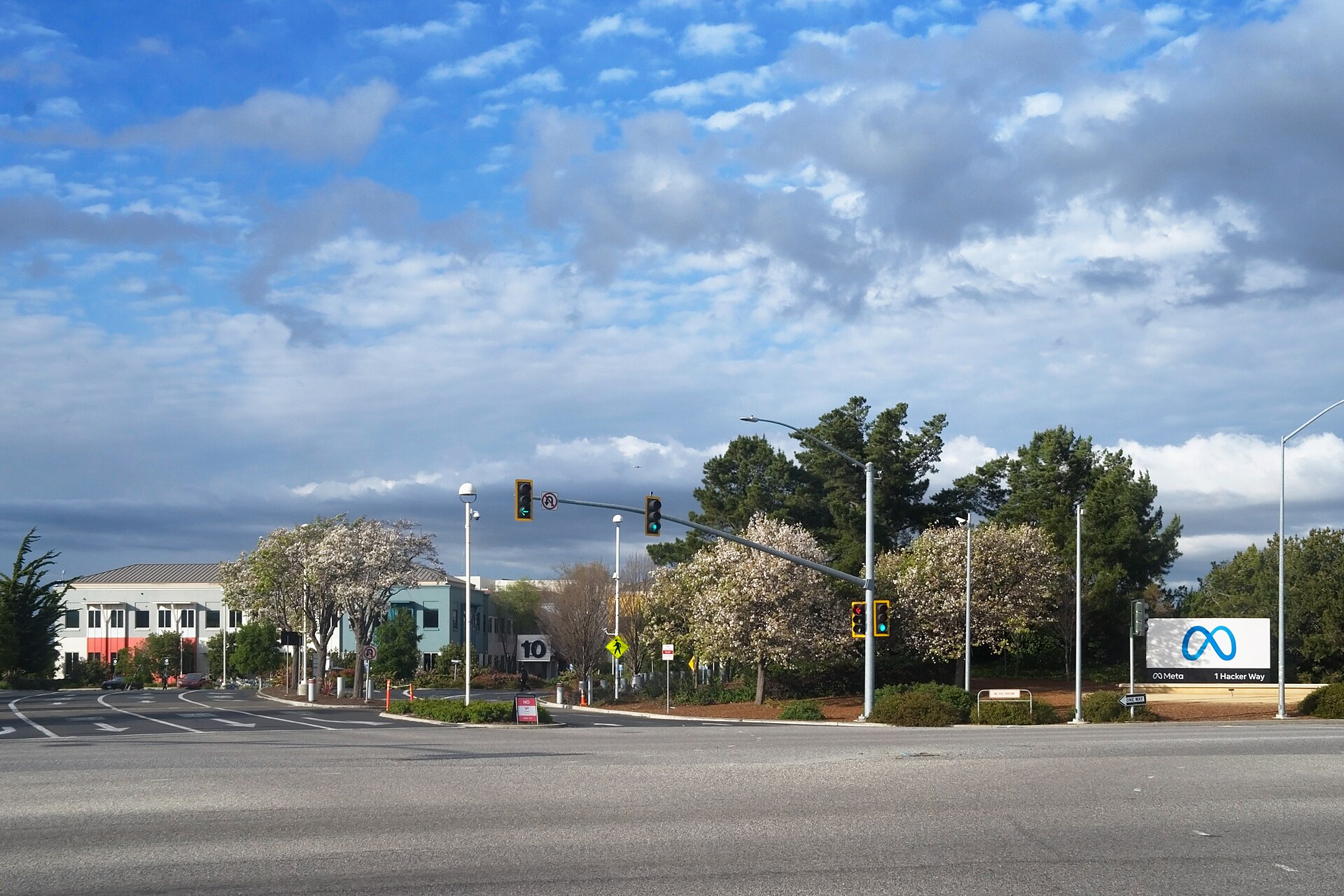
Image: Meta Platforms Headquarters Menlo Park California.jpg by LPS.1, CC0, via Wikimedia Commons. Illustrative photo; it does not show the events described.


