


Televisa and Fintech Holdings agree to buy AT&T Mexico for $2 billion

Grupo Televisa and Fintech Holdings have agreed to buy AT&T’s Mexican mobile business for $2 billion in cash, a deal announced on October 13 that would move Mexico’s second-largest mobile operator to a consortium owned equally by a media group and an investment firm. On October 30, Televisa co-CEO Alfonso de Angoitia told analysts that combining Televisa’s existing assets with AT&T Mexico would produce about $8 billion in annual revenue and roughly 23% of Mexico’s telecom market, Bloomberg Línea reported. Closing is expected in the first quarter of 2027, subject to Mexican regulatory approval. The sale follows Telefónica’s April agreement to leave Mexico, and together the two deals are reshaping the country’s mobile market.
The terms of the deal
Reuters reported from Mexico City on October 13 that the buyers will pay $2 billion in cash, subject to adjustments and to additional contractual and contingent benefits that the report does not detail. Televisa told the news agency that it would fund the purchase with available cash and non-recourse secured debt. Bloomberg Línea gave the split on October 30: each partner puts in $400 million of equity, and the remaining $1.2 billion comes from a five-year non-recourse loan. The pieces add up to the $2 billion price.
Non-recourse debt is generally limited to the assets of the borrowing vehicle rather than the wider balance sheets of its owners. De Angoitia said Televisa’s net debt relative to EBITDA, a common measure of leverage, would rise to 1.9 times from 1.6 times at the end of the third quarter, according to Bloomberg Línea.
Fintech Holdings is a private investment firm and holding company owned by the Mexican billionaire David Martínez, Reuters reported. It already owns 22.3% of Televisa and will take a 50% stake in the purchasing consortium. Televisa’s shares rose 5% in after-hours trading on the New York Stock Exchange after the announcement, while AT&T shares gained 1.6% to close at $22.85, Reuters said.
What Televisa says it gets
Speaking at a quarterly conference with analysts, De Angoitia said the combined assets would include more than 24 million mobile subscribers, 5.7 million broadband subscribers and 6.3 million video subscribers, Bloomberg Línea reported. He argued that the deal would substantially strengthen Televisa’s competitive position by putting fixed and mobile services on one platform, enabling bundled offers, cross-selling and operational savings. These are company projections presented to analysts, and the reports Lens opened do not show an independent audit of them.
Moody’s, according to Bloomberg Línea, said cross-selling and bundling could raise the share of customers who buy four telecom services from one provider, a group the article says brings higher average revenue and lower churn. Scotiabank, in a note quoted by Reuters, called the price a bargain and estimated that Televisa’s share of fixed and wireless subscribers in Mexico would rise to 19% from 8%. The bank added that the new venture could seek a direct-to-cell partnership with operators such as Starlink to compete with the market leader.
AT&T Mexico’s position against Telcel
AT&T Mexico is the country’s second-largest mobile operator, behind América Móvil’s Telcel. Televisa put its subscriber base at about 24.7 million in December 2025, according to Reuters. Light Reading gave a lower figure of 23.4 million at the end of June 2026; the two numbers refer to different dates.
For 2025, the unit had revenue of 85.4 billion pesos, equal to $4.65 billion at the 18.36 pesos per dollar that Reuters used, and operating income of 1.4 billion pesos, figures that Televisa supplied. La Crónica de Hoy also reported the revenue and profit figures. Lens analysis: on those numbers the business earned an operating margin of about 1.6%, and the $2 billion price is about 0.43 times annual revenue. That margin helps explain why Bloomberg Línea lists improving AT&T Mexico’s operating margins among the challenges for the buyers, along with financial discipline and integrating the business.
Sources disagree on how large the leader is. Light Reading reported that Telcel had 84.5 million customers at the end of June 2026 and quoted the research firm LightShed as saying Telcel still controls nearly 60% of the market. Telco Magazine put Telcel’s mobile share at around 70%. Reuters reported that Telcel operates twice as many towers as the AT&T unit and has a stronger 5G network nationwide. The reports do not say what base each share is measured on, and De Angoitia’s 23% figure for the combined assets refers to the total telecom market rather than mobile alone.
Why AT&T is selling
AT&T said the sale lets it focus capital on its U.S. fiber and 5G businesses, Reuters reported. Chairman and CEO John Stankey described the move as consistent with AT&T’s long-term strategy of concentrating capital allocation on growth opportunities in the U.S. market, according to Telco Magazine and Light Reading. AT&T expects to report the Mexican operation as held for sale from the third quarter of 2026 until the transaction closes, Telco Magazine said.
Light Reading, citing Bloomberg, reported that AT&T had been working on a sale since August 2025 and was said to be near a deal with Televisa in December 2025. It added that AT&T sold its minority stake in Sky Mexico to Televisa in 2024. Light Reading also quoted LightShed analysts Walt Piecyk and Joe Galone, who said the $2 billion in proceeds covers less than five weeks of AT&T’s annual capital investment and that Carlos Slim is “still winning in Mexico.”
Reports differ on AT&T’s history in the country. La Crónica says AT&T arrived in 2013 by buying Iusacell and later Nextel; Telco Magazine gives 2014 and Light Reading gives 2015. Telco Magazine puts the cost of the two purchases at $4.4 billion in total. On later spending, La Crónica says AT&T invested at least $6 billion in its mobile access infrastructure since 2018, while Telco Magazine says it has spent more than $10 billion building out its infrastructure in Mexico.
Credit agencies and the first-order risks
Moody’s and Fitch said in recent reports that the transaction would not affect Televisa’s credit profile, according to Bloomberg Línea; Lens did not open the reports. Unnamed analysts cited by La Crónica de Hoy called the price quite reasonable in terms of financial multiples, a judgment that the newspaper does not tie to named firms.
The risks are mostly operational. Reuters noted that this is Televisa’s second attempt at telecommunications, after an unsuccessful effort from 2012 to 2014, and that entering the Mexican market has long been hard because of high costs and competition from Telcel. Light Reading’s LightShed analysts credit Stankey with turning AT&T into a focused U.S. wireless and fiber business, which is the other side of the Mexican exit.
A market changing hands
Telefónica announced in April that it would sell its Mexico business for $450 million to a consortium of Oxio and Newfoundland Capital Management, Bloomberg Línea and Light Reading reported. Light Reading described Movistar as Mexico’s third-largest mobile operator, with 21.7 million customers and about 16.6% market share at the end of 2025, and said it has operated effectively as a virtual operator on AT&T Mexico’s network since a 2019 wholesale deal. According to Light Reading, which cited El Economista, Mexico’s antitrust commission approved the Telefónica sale earlier in October, although it had not yet been finalized.
Lens analysis: if both deals close, Movistar’s new owners would depend on a network that Televisa and Fintech would control, and Telcel would face a larger, better-funded rival than AT&T Mexico has been. Neither outcome is certain, since the AT&T transaction has not received regulatory approval.
What to watch
La Crónica de Hoy reported that the purchase needs approval from Mexico’s telecommunications regulator and from the antitrust commission. Telco Magazine said the former regulator, the IFT, was dismantled in late 2025. Lens did not find a published timetable for either review.
After approval, the questions are commercial. Scotiabank expects the owners to be able to commit more resources to capital spending, Moody’s describes the upside as bundling that lifts revenue per customer, and AT&T Mexico’s thin operating margin leaves little room for integration missteps. De Angoitia’s estimate of $8 billion in revenue and a 23% market share will become testable only after closing, when Televisa begins reporting the combined results.
Sources
- Bloomberg Línea: Televisa anticipa que compra de AT&T generará ingresos anuales de US$8.000 millones (Italia López, October 30)
- Reuters via The Star: AT&T sells Mexico unit to Televisa, Fintech for $2 billion (October 13-14)
- Light Reading: AT&T follows Telefónica out of Mexico with $2B sale (Michelle Donegan, October 14)
- Telco Magazine: Grupo Televisa and Fintech Holdings buy AT&T Mexico for US$2bn (Sam Fenwick, October 14)
- La Crónica de Hoy: Televisa y Fintech adquieren AT&T México por 2 mil millones de dólares (Fátima Chávez, October 13)
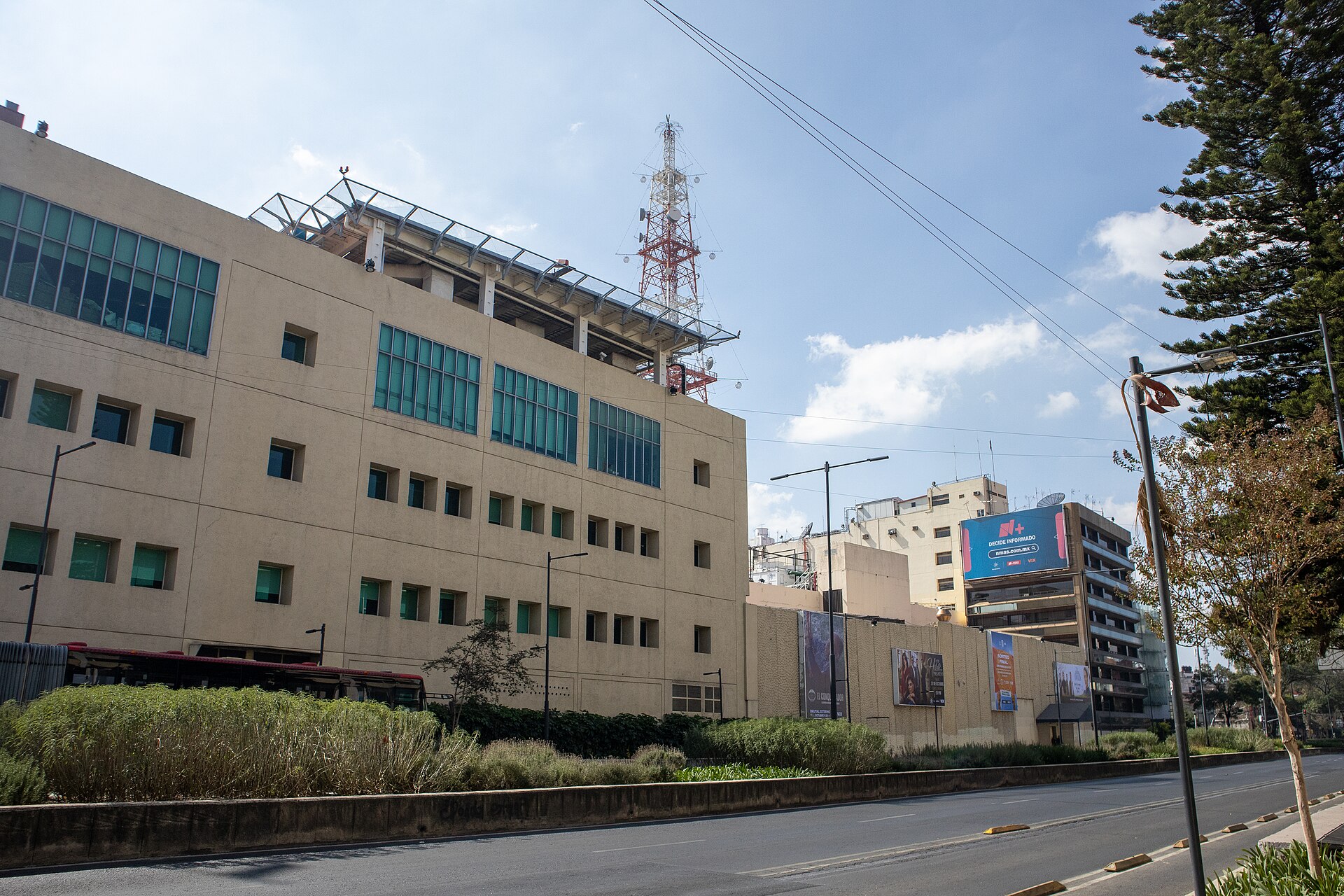
Image: Oficinas de Televisa Chapultepec.jpg by ProtoplasmaKid, CC BY-SA 4.0, via Wikimedia Commons. Illustrative photo; it does not show the events described.


