Other News on 16 November 2026: WHO Antimicrobial Resistance Warning, Maileva Data Breach, Phuket Fire, Jordan Telegram Ban

This post collects four items reported on 16 November 2026: a World Health Organization (WHO) warning on antimicrobial resistance, a data breach at the French postal subsidiary Maileva, a deadly fire on Phuket island in Thailand, and Jordan’s ban on the Telegram app. Each item is attributed to the outlets named.
WHO warns on antimicrobial resistance
Antimicrobial resistance (AMR) could cause 39 million deaths over the next 25 years, the WHO said on Monday 16 November, according to Al Jazeera and Bernama, which carried a report from the German news agency dpa (Deutsche Presse-Agentur). The Manila Times says the WHO estimated that figure for the period between now and 2050. Al Jazeera reports that, according to WHO figures, drug-resistant infections directly caused more than one million deaths in 2021 and were linked to about 4.7 million more.
In a WHO review of 183 countries this year, nearly nine in 10 had a national action plan against AMR, compared with about four in 10 in 2017, but only 42 had a plan that was financed, implemented and monitored, WHO technical officer Pravasha Prakash said. The WHO also released two diagnostics tools, one defining which tests should exist at each level of health care and one listing 73 laboratory procedures. Jean-Pierre Nyemazi is called acting director of the WHO’s AMR department by Al Jazeera, interim head of AMR by The Manila Times, and a WHO specialist by Bernama.
Maileva data breach in France
La Poste Group said in a statement dated 15 November that Maileva, a subsidiary of its Docaposte unit that sends documents for companies, suffered a complex cyberattack in mid-September, and that the names and postal addresses of 22 million recipients of its clients’ mail were leaked. It said no alteration or destruction of data was found, the French data protection authority (CNIL) was notified, a complaint was filed and a judicial investigation is under way. Franceinfo reports that La Poste announced the figure on Saturday 14 November, that the Paris prosecutor’s office confirmed to Agence France-Presse that a police cybercrime brigade leads the inquiry, and that La Poste has not said how the attackers got in.
The reports differ on what was exposed. La Poste Group says the content of documents is a matter between Maileva’s clients and their recipients. Franceinfo reports that the landlord Flandre Opale Habitat said financial details such as an invoice amount were also taken, and that Foch hospital in Suresnes told patients that payment reminder letters may have been read.
Fire in Patong, Phuket
A fire early on Monday 16 November in Patong, on Phuket, killed 11 people and injured 16, police said, according to Al Jazeera and the Bangkok Post. Al Jazeera reports that it began at about 3:17 am in a building housing a restaurant, rented rooms and a motorcycle rental shop; authorities said 15 of the injured were Thai, one was from Myanmar, and no tourists were among the dead or injured. The Bangkok Post reports that officials said about 100 motorcycles, petrol and lubricants were stored in the shop, and that police have ruled out arson.
Accounts of the cause differ. Phuket police commander Surachai Suksai said an electrical transformer near the building exploded shortly before the fire (Al Jazeera). Governor Chotenarin Kerdsom said a short circuit probably occurred on a substation power pole in front of the shop during a storm (Bangkok Post). VnExpress says the cause had not been established. The Bangkok Post describes a four-storey building, while VnExpress, citing Patong’s deputy mayor, says 10 victims were found on the fifth floor.
Jordan bans Telegram
Jordan’s Public Security Directorate announced the Telegram ban in a statement on Monday 16 November, according to Al Jazeera and The National. Reuters, carried by Al-Monitor, says the authorities said they will block the app. The National reports that the directorate gave the aim as preventing cybercrime, threats and extortion, and content that breaks the law, threatens public security or promotes extremism and radicalism.
Al Jazeera places the measure amid a security crackdown after nine people were killed on 23 October in an attack on a Greek Orthodox church in Karak governorate; a security court sentenced three men to death for it on Sunday 15 November, per The National. The National says officials did not link Telegram to that attack. Reuters says Telegram did not immediately respond to a request for comment. The reports do not say when the block takes effect.
Sources and notes
Read in full on the outlet pages: Al Jazeera on AMR, The Manila Times (agency copy, agency not named on the page, so attributed to the paper) and Bernama (dpa); the La Poste Group statement and two franceinfo reports (14 November and 15 November); Al Jazeera, the Bangkok Post and VnExpress on the fire; Al Jazeera, The National and Al-Monitor (Reuters) on Telegram. Not found: the WHO’s own release, the CNIL’s entry on Maileva, any Jordanian statement in Arabic, any Telegram comment, and a Thai police statement; the fire figures are the outlets’ reports of police and official statements. The Manila Times also reports that 36 percent of countries have a national reference laboratory able to test for resistance in all bacteria and fungi the WHO monitors, against an 80 percent target for 2030; this appears only there and is left out above. Thai names are spelled differently by different outlets; the Bangkok Post spellings are used. Conflicting figures and descriptions are shown above.
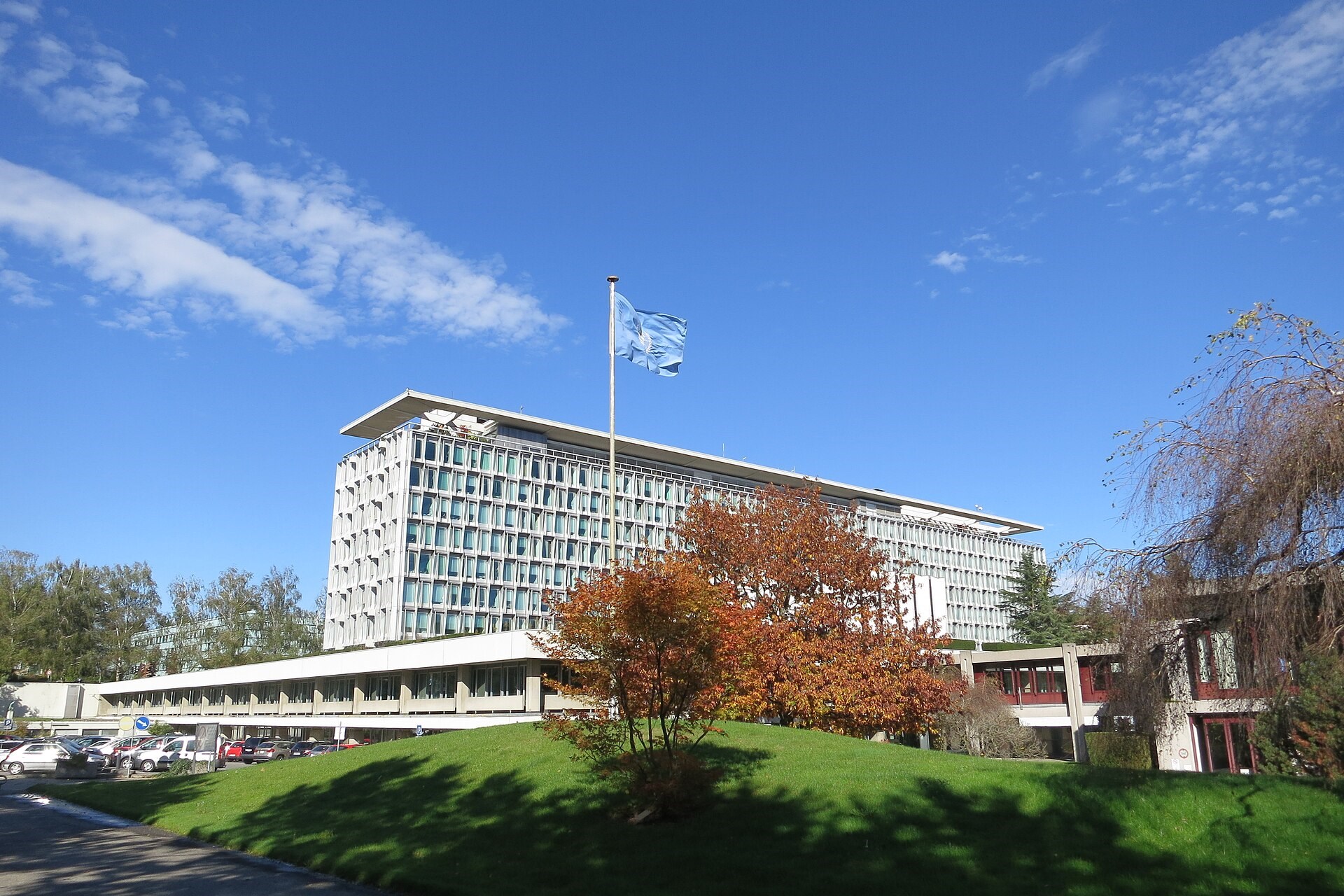
Image: The main building of the World Health Organization headquarters in Geneva, Switzerland, seen from the southwest with a light blue flag on a pole in front, photographed on 28 October 2013. Photo: Thorkild Tylleskar (CC BY-SA 3.0), via Wikimedia Commons; cropped. Stand-in image: it does not show the events in the news items in the post.