Oregon and Virginia Attorneys General Sue SpaceX Over Grok Deepfakes and Safety Claims; the Companies Have Not Responded, and Reports Differ on Defendants and Filing Dates

The attorneys general of Oregon and Virginia filed separate consumer-protection lawsuits against SpaceX over its Grok chatbot and the social network X, CNBC reported on 23 November 2026. Oregon Attorney General Dan Rayfield and Virginia Attorney General Jay Jones allege that SpaceX failed to put safeguards in place to stop Grok and X users from making and sharing harmful deepfake images, “especially alleged AI-generated child sexual abuse material,” and falsely represented its AI apps and social network as generally safe. The suits cite Virginia’s Consumer Protection Act and Oregon’s Unlawful Trade Practices Act. Both seek injunctions, civil penalties, disgorgement and legal costs, and Virginia also seeks restitution for consumers. According to CNBC, Oregon filed in Multnomah County Circuit Court and Virginia in the Circuit Court for the City of Richmond, and as of early Monday the suits were awaiting the courts’ acceptance. Several outlets call these the first state lawsuits over Grok’s sexual deepfakes; Engadget and TechEchelon also mention an earlier suit by the city of Baltimore against xAI.
What the officials said
MLQ and AI Weekly attribute this quotation to Jones: “Companies that deploy powerful tools don’t get to ignore consumer safety and call it innovation.” Engadget, citing a Virginia press release, quotes Jones as saying the companies “prioritized growth and engagement over safety.” According to TechEchelon, which attributes the wording to the complaints, Jones’s filing says harmful imagery “can cause fear, distress, and anxiety in those who are unwillingly exposed to the content.” Another quotation, that “the lack of needed safety measures was considered a feature, not a bug, which they promoted as ‘spicy mode,’” is attributed to Rayfield by MLQ and to Jones by AI Weekly.
The image estimate
MLQ and AI Weekly cite an analysis by the Center for Countering Digital Hate (CCDH) estimating about 3 million sexualized images generated on X between 29 December 2025 and 8 January 2026, including about 23,000 that appeared to depict children (AI Weekly gives 23,338). MLQ says the states cite the study. CNBC’s article does not contain the figure. Startup Fortune gives a range of 1.8 to 3 million explicit deepfakes from an unnamed outside estimate. Lens did not read the CCDH report or the complaints.
Background and response
Startup Fortune reports that Rayfield sent xAI a formal demand letter on 23 January 2026 over nonconsensual sexual content from Grok; only that outlet mentions it. MLQ and Startup Fortune, citing The Next Web and MLex, say SpaceX told investors in an October securities filing that Virginia was weighing legal action; neither names the filing. CNBC says SpaceX did not immediately respond to a request for comment. Engadget cites a post by X Safety saying users “deliberately” violated the Terms of Service, which it does not describe as a SpaceX response to these suits.
Where reports differ
- Defendants: CNBC names SpaceX. Engadget names “SpaceX Super Intelligence.” MLQ and Startup Fortune say Virginia’s suit names SpaceX Super Intelligence Corp. and its LLC (formerly xAI), X Corp. and Space Exploration Technologies Corp. None of the pages Lens read names Oregon’s defendants.
- Filing dates: CNBC and TechEchelon say Oregon filed on Sunday evening and Virginia on Monday morning; MLQ, Startup Fortune and AI Weekly say both suits were filed on Monday.
- Penalties: MLQ says Virginia seeks up to $2,500 per willful violation; Startup Fortune says Oregon’s cap is $25,000 per willful violation.
- The research group’s name: MLQ writes “Center for Countering Digital Harm”; TechEchelon writes “Center for Countering Digital Hate.”
Sources and notes
CNBC (Lora Kolodny, 23 November, 7:40 a.m. Eastern); Engadget (Jackson Chen, 10:57 a.m. Eastern); MLQ.ai (23 November, 1:47 p.m.); Startup Fortune (Walter Schulze, 7:27 p.m.); TechEchelon (Jay Goldberg, 8:02 a.m. Eastern); AI Weekly (23 November, 15:31 UTC, saying it is based on CNBC). Not opened: Virginia’s press release and complaint (linked from the pages), Oregon’s complaint (MLQ says it was not posted on the attorney general’s website when written), The Next Web, MLex and the CCDH report. The allegations are the states’ and are unproven; SpaceX had not responded in the coverage Lens read.
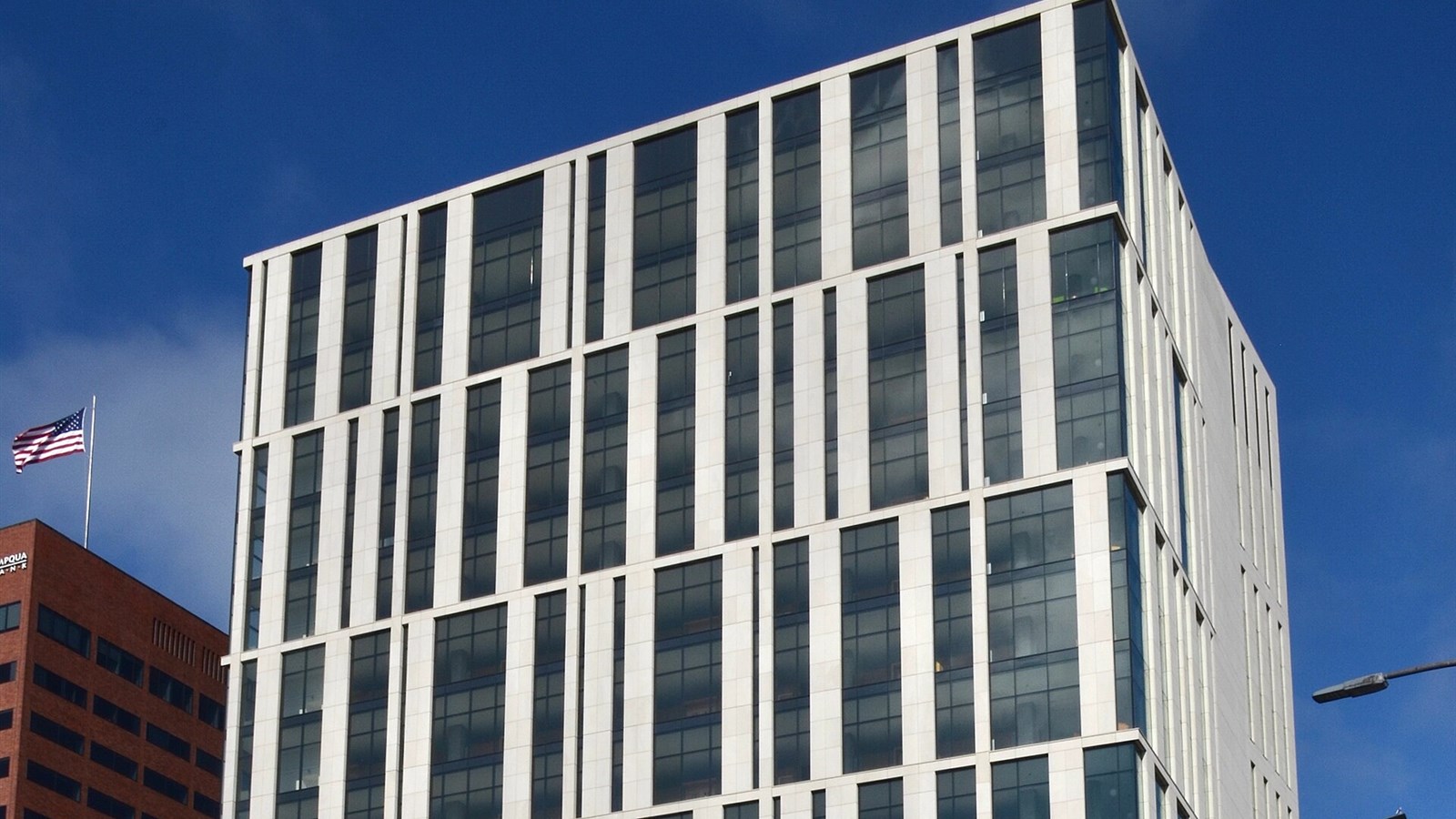
Image: The Multnomah County Central Courthouse in Portland, Oregon, photographed in July 2021. Credit: Steve Morgan, CC BY-SA 4.0, via Wikimedia Commons; cropped. File photo; Oregon’s suit was filed in Multnomah County Circuit Court and Virginia’s in Richmond.