OpenAI Launches ChatGPT Wallet So Its Dots Agents Can Make Purchases, Starting With US Pro Users

OpenAI said on 13 November 2026 that it is launching ChatGPT Wallet, a payment feature that lets its “dots” (personal artificial intelligence, or AI, agents) complete purchases for users after the user approves each one, according to OpenAI’s announcement and CNBC. OpenAI says the rollout is limited. As of 14 November 2026, Wallet is for ChatGPT Pro subscribers in the US, and OpenAI’s help page says it is rolling out gradually, so some eligible users may not have it yet.
How a purchase works, according to OpenAI
OpenAI says users add a card once, then approve each purchase without re-entering payment details. Before each purchase, the user reviews the items, the total and the selected card, and approves with a security check such as Face ID or a fingerprint scan. OpenAI says each approval creates a record of what the user authorized the agent to buy.
After approval, the card network provides a payment token, which OpenAI describes as a substitute for the real card details, with its own card number, security code and expiration date. OpenAI says the charge goes to the selected card without Wallet sharing the actual card details with the business or the agent. The company says users keep the card’s existing rewards and its protections for eligible disputes, such as a defective item.
OpenAI’s help page adds that approval alone does not confirm an order, and it tells users to check for a confirmation from the merchant. OpenAI also says it expects, over time, to let users set spending limits, purchase categories or time periods and pre-approve purchases. That is not part of the current rollout.
Who can use it
- Eligibility: ChatGPT Pro subscribers aged 18 or older in the US, with an eligible US-issued card and a US billing address, according to OpenAI.
- Cards: OpenAI’s announcement names American Express, Mastercard and Visa as partners. Its help page lists eligible American Express, Chase, Mastercard and Visa credit cards. It says debit cards and virtual cards are not supported at launch, and that a Chase cardholder must be the primary cardholder.
- Where it works: in conversations with a dot. The help page says Wallet is not available in Chat, Work or standalone Codex threads.
- Partner statements: In OpenAI’s announcement, Mastercard’s Sherri Haymond and Visa’s Rubail Birwadker each say the collaboration connects user-approved purchases to systems that businesses and banks already use. Luke Gebb, executive vice president and global head of innovation at American Express, told CNBC the limited rollout is intentional. Chaya Nayak, who leads product for monetization and payments at OpenAI, told CNBC the company is focusing first on merchants and network partners.
Merchants and fees
OpenAI’s announcement says: “Agentic commerce is still in its early days.” It adds that some sites may unintentionally block purchases through Wallet, and it published a Commerce Partner Playbook for businesses covering product information, agent access and work with payment and risk providers. OpenAI says it is working with fraud-prevention companies Forter, Riskified, Sardine and Signifyd, and with payment service providers Adyen, Checkout.com and Stripe, so that their systems recognize legitimate purchases made by agents.
CNBC reports that OpenAI is not taking a cut of transactions at launch. CNBC also reports that United Airlines said on Wednesday 11 November that it will block agents from accessing its systems to book tickets, and that Amazon prevents agents from buying products on its platform. According to CNBC, OpenAI introduced an Instant Checkout feature last fall and then moved away from it, and had rolled out a revamped shopping experience by March.
OpenAI says 1.2 billion people use ChatGPT each week. CNBC reports more than 1.2 billion weekly active users and nearly 100 million paying users at the end of the third quarter.
Where reports differ
The card list differs by source. OpenAI’s announcement and CNBC name American Express, Mastercard and Visa, while OpenAI’s help page and GSMArena also list Chase. The no-fee point comes from CNBC; OpenAI’s announcement and help page do not address fees.
Sources and notes
Sources: OpenAI, “Introducing ChatGPT Wallet” (13 November 2026); OpenAI Help Center, “Making purchases with ChatGPT Wallet”; OpenAI’s release notes (entry dated 13 November); CNBC, Ashley Capoot’s report (13 November, updated 1:56 p.m. Eastern); 9to5Mac (13 November); GSMArena (13 November). Lens read the OpenAI announcement, the help page, the release-note entry and the CNBC article in full as text; 9to5Mac and GSMArena were read as article text. Lens did not open the Wallet terms, the Wallet privacy notice or the Commerce Partner Playbook. The details about United Airlines, Amazon, the Instant Checkout history, the lack of a transaction fee and the paying-user count come from CNBC alone; Lens did not check United’s or Amazon’s own policies. The story is still developing as of 14 November 2026.
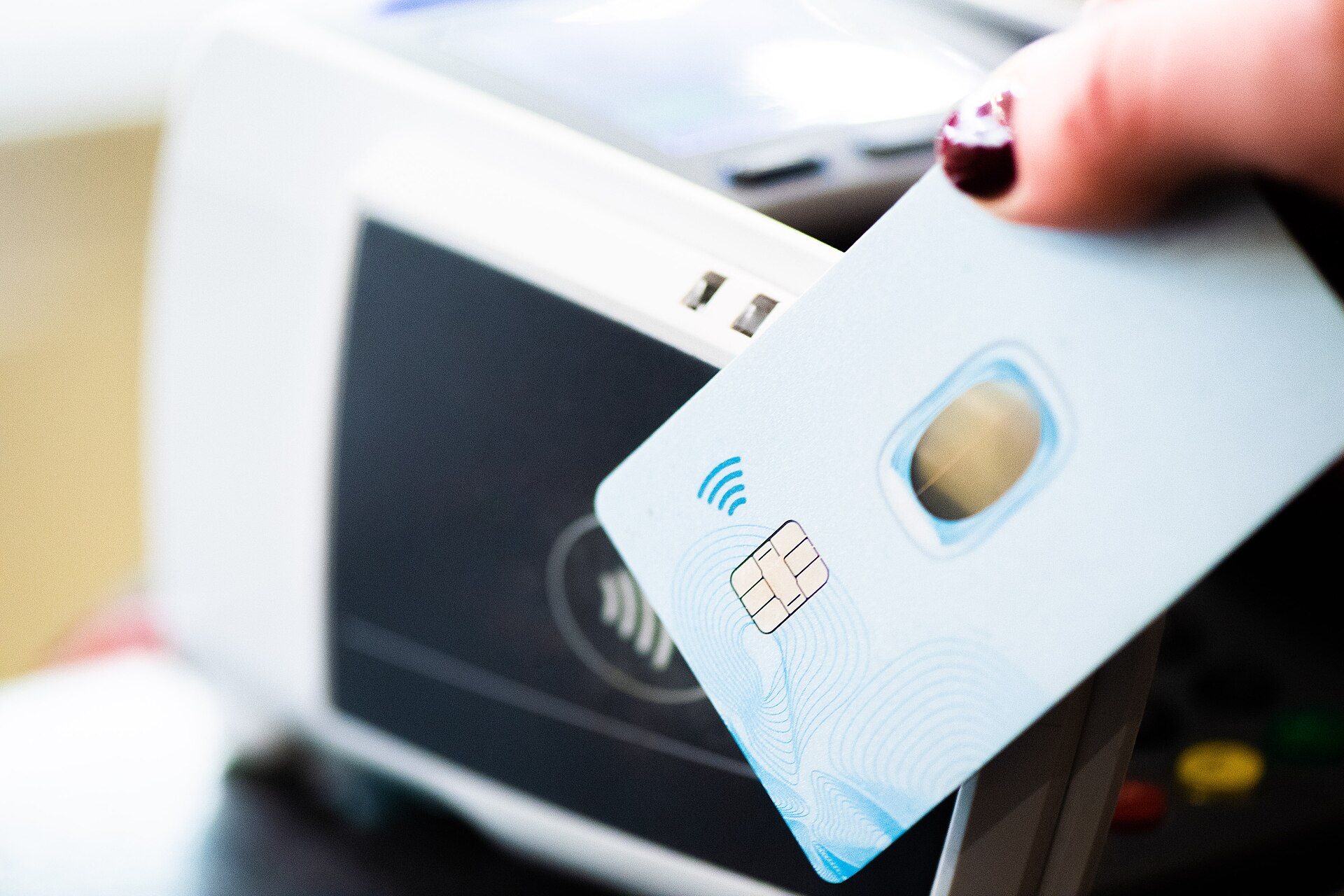
Image: A person holding a contactless bank card up to a card payment terminal, December 2022. Photo: European Commission, Audiovisual Service (CC BY 4.0), via Wikimedia Commons. Stand-in image: not a photo of the ChatGPT Wallet or of an AI agent making a purchase.