


Noetix bets on a RMB 9,998 humanoid as it prepares a Hong Kong listing

Noetix Robotics, a Beijing humanoid-robot maker, sells its Bumi robot for RMB 9,998, and Bloomberg reported on October 22 that the company has filed confidentially for a Hong Kong initial public offering. An analysis from the publication Jumpstart, republished by TechNode on October 30, argues that the low price is the first step of a deliberate plan: build an affordable, capable body now, and add more advanced intelligence as hardware sales pay for it.
The company has not published revenue, profit or shipment figures in any of the sources Lens opened, so the strategy is best read as a stated plan, not a proven result.
The product and the price
TechNode reported when Bumi was unveiled in October 2025 that it stands 94 centimeters tall, weighs 12 kilograms, walks on two legs and can perform actions such as dancing. It was priced under RMB 10,000, which TechNode converted to about $1,370 at the time. The company aimed the robot at education and home use, and described the launch as a milestone in bringing humanoid robots from labs into everyday life.
TechNode listed the design choices behind the price: lightweight composite materials, a self-developed motion-control system and an open programming interface. The Jumpstart analysis adds that early engineering work centered on the robot’s body and motion control, and that composite materials were used to reduce reliance on metal. It describes Bumi as aimed at programming education and companionship, and as a humanoid ordinary buyers could consider purchasing for themselves.
Bloomberg’s report, as relayed by TechNode, says Bumi starts at RMB 9,998 and that Noetix also makes N-series and E-series bipedal robots. Humanoids Daily, summarizing the Bloomberg piece, adds that the lineup includes the N2 and the E1, and that the E1 education edition carries a 67 TOPS compute board.
From a doctoral dropout to a gala stage
According to the Jumpstart analysis, founder Jiang Zheyuan left a Ph.D. program at Tsinghua University in 2023 and started the company that September. Bloomberg’s report, carried by The Standard in Hong Kong, also dates the company’s founding to September 2023 and says the founding team came from mainland institutions including Tsinghua University and Zhejiang University. The filing entity is named Songyan Power Beijing Technology.
Jumpstart says the company’s N2 robot finished second in Beijing’s humanoid half-marathon in 2025. Noetix robots then appeared in a sketch with the comedian Cai Ming on the 2026 Spring Festival Gala, which Caixin dated to February 16 on CCTV and described as featuring four robot makers.
At the AWE exhibition in March, Jiang said orders surged after the gala and set a 2026 target of more than 10,000 Bumi sales, according to Jumpstart. He named parts supply and production-line management as the main hurdles. The company has not said how many robots it has sold.
The money: a March round and an IPO filing
Caixin reported on March 2 that Noetix completed a Series B round of close to RMB 1 billion, which it converted to about $145.9 million. Bloomberg, as summarized by Humanoids Daily, gives the figure as about $150 million. The Standard and TechNode report that the round was led by Chendao Capital, an investment platform affiliated with the battery maker CATL.
On October 22, Bloomberg reported, citing people familiar with the matter, that Noetix had filed confidentially for a Hong Kong IPO that could raise several hundred million dollars and might list as early as 2027. Humanoids Daily relays that the sources said the offering’s size and timing could change, and that Noetix did not reply to Bloomberg’s request for comment. The report gives no valuation, offer price or planned use of proceeds.
Noetix is one of several Chinese robotics companies pursuing Hong Kong listings, Bloomberg said, and Hong Kong IPOs have raised more than $50 billion in 2026, according to the report as summarized by Humanoids Daily.
The strategy: body first
The Jumpstart analysis lays out the logic in three parts. First, a cheap, capable body gets robots into homes, schools and training programs. Second, revenue from that hardware helps pay for the more expensive work of building intelligence. Third, overseas sales test whether the model travels.
On the intelligence side, Jumpstart says a dedicated team began forming in July 2025. In September, the analysis says, Noetix launched a sub-brand called Scalabot for embodied intelligence and a world-model architecture it calls HERON. The analysis concludes: “Building the body first won Noetix a place in the market.” It frames the open question as whether the hardware business can supply enough customers, experience and cash to fund the intelligence work, which it calls the financial hinge of the strategy.
Lens analysis: the target of more than 10,000 Bumi sales is a useful yardstick. At the RMB 9,998 list price, 10,000 robots would bring in about RMB 100 million, roughly a tenth of the March round, assuming every unit sold at full price. Hardware sales at that scale would not by themselves fund a large AI research program, which may help explain the interest in a public listing.
Early sales channels and the overseas plan
Jumpstart says an investor, Beijing Industrial Development Investment Management, reported partnerships between Noetix and the programming-education provider Codemao and the retailer Kidswant, along with school deployments and donations. The analysis does not give unit numbers for any of these.
For overseas markets, the analysis reports that at CES in January, co-founder Zhang Shipu named five target regions: North America, Europe, the Middle East, Southeast Asia, and Japan and South Korea. He aimed for thousand-unit overseas scale in the second quarter, Jumpstart says. Lens found no opened source that reports whether that target was met.
The market it would list into
Noetix would reach investors at a difficult moment for listed Chinese robot makers. Bloomberg’s report, per Humanoids Daily, says shares of Unitree have fallen almost 40 percent from their peak since its August Shanghai IPO. Reuters, in a report published October 28 by The Daily Star, says Unitree’s shares have halved since trading began in August, after retail buyers oversubscribed the offering 8,000 times. The two accounts measure from different starting points, and both sources are cited.
Humanoids Daily also relays Unitree’s own warning that humanoid commercialization is at an early stage, with uncertainty over technology, downstream demand and the supply chain. Reuters describes a wider sell-off in Chinese AI and technology shares, with the STAR50 index down 40 percent in under four months.
Lens analysis: a consumer humanoid priced near $1,400 gives Noetix a story that differs from companies selling industrial or research machines, but the market for such a product is unproven. The sources Lens opened give no figures for how many buyers use Bumi after the first weeks, or how often schools reorder.
What to watch
The first signal is the public prospectus. A Hong Kong filing would eventually disclose revenue, shipments, margins and customer concentration, which would test the Jumpstart analysis against audited numbers. Bloomberg’s sources said the timing could change, so a 2027 listing is a possibility, not a schedule.
The second is whether the 10,000-unit target for 2026 is met, and at what cost. Jiang himself pointed to parts supply and production-line management as the constraints. The third is whether Scalabot and the HERON architecture produce a visible product upgrade for existing Bumi owners, since the strategy depends on intelligence being added after the hardware is sold.
Sources
- TechNode (republished from Jumpstart): Noetix’s RMB9,998 Humanoid Is Just the Start
- TechNode: Affordable humanoid robot maker Noetix reportedly files for Hong Kong IPO
- The Standard (Hong Kong): CATL-backed Noetix Robotics files confidentially for HK IPO, Bloomberg reports
- Humanoids Daily: Noetix Robotics Hong Kong IPO filing
- Caixin Global: Noetix Robotics Raises Nearly 1 Billion Yuan After Spring Festival Gala Skit
- TechNode: China’s Noetix Robotics unveils $1,370 humanoid robot Bumi
- The Daily Star (Reuters): In China, the AI bubble has already burst
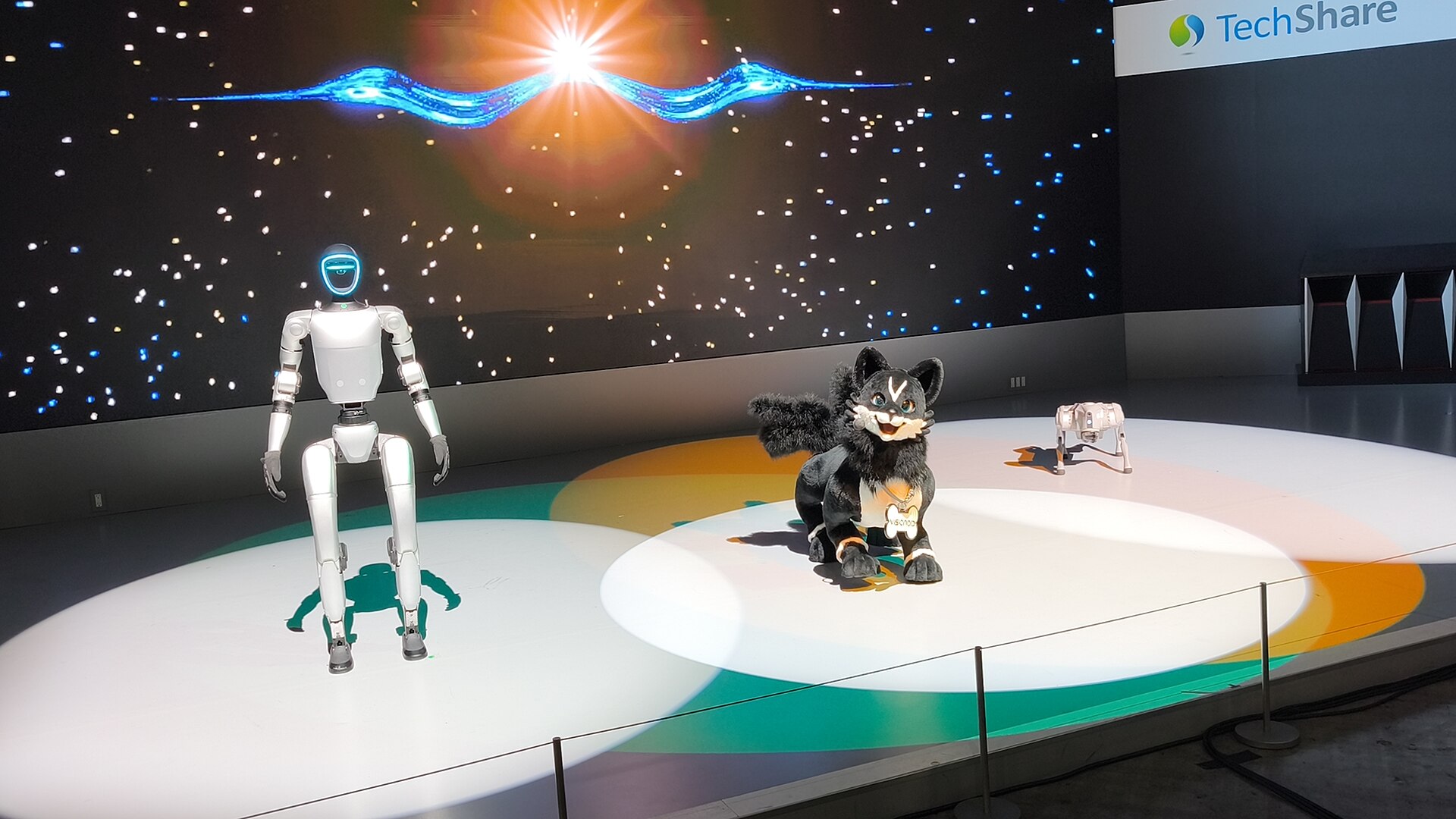
Image: Japan-Mobility-Show-2025-RuinDig 0567.jpg by RuinDig/Yuki Uchida, CC BY 4.0, via Wikimedia Commons. Illustrative photo; it does not show the events described.


