


Mexico’s advanced-tech exports to the U.S. triple in five years, and the debate turns to value

Mexico’s exports of advanced technology equipment to the United States have roughly tripled in a little over five years and have exceeded $100 billion a year since 2024, according to Mexico Business News, which cites U.S. Census Bureau data. The publication reported on October 28 that shipments from January through August 2026 already topped the full-year 2025 total by nearly $2 billion. The surge tracks U.S. spending on AI data centers, and Mexican analysts quoted in the same coverage disagree about how much of the resulting value stays in the country. Lens could not open the Census Bureau tables behind the headline figure and relies on the publication’s account of them.
What the September trade data show
INEGI, Mexico’s statistics agency, published its September trade figures on October 27. Total exports were $77.8 billion, up 37.9% from September 2025, according to Expansión and Mexico News Daily. Mexico Business News gives the growth rate as 37.8%; the dollar total is the same in all three. Expansión reported that it was the third-highest monthly total on record, behind July at $81.42 billion and August at $78.01 billion.
Manufactured goods made up $72.77 billion of the September total, up 39%. Non-automotive manufactured goods rose 53% to $56.34 billion, while automotive exports rose 5.7% to $16.43 billion. Electrical and electronic equipment, the category closest to computing hardware, nearly doubled, up 94.7% from a year earlier.
For the first nine months of 2026, exports reached $627.19 billion, up 30.4%, according to INEGI data reported by Mexico News Daily and Expansión. Mexico Business News puts the growth at 30.3%. Non-automotive manufactured goods accounted for $436.64 billion of the nine-month total, up 46%. Mexico News Daily noted that the January–September figure was still $37.6 billion short of the 2025 full-year record of $664.8 billion, and described it as virtually certain that the record would fall once October is counted.
The United States is the destination that matters. Non-oil exports to the U.S. rose 43.5% in September, against 16.4% for the rest of the world, Expansión reported. Over January to September, the U.S. took 84.8% of Mexico’s non-oil exports.
Why AI demand is the driver
Mexico Business News links the export growth to U.S. demand for AI infrastructure. Diego López, a senior economist at BBVA Research quoted by DPL News on September 9, gave the same explanation: American demand for AI, data centers, memory chips and servers began in 2022, took off in 2023 and, in his view, could grow by 40% to 120% by the end of the decade. He named Mexico’s position as a convenient exporter to the U.S. as a second factor.
Grupo Financiero Banorte, cited by Mexico Business News, said external demand should stay supported in the short term by the boom in AI-related products. President Claudia Sheinbaum said at her October 16 press conference that electronics exports have risen a great deal and that plants in Mexico are expanding because of data-center demand in the United States, according to the outlet PorEsto.
Mexico Business News also placed the export figures beside other signs of the U.S. buildout in its October 29 weekly roundup. It reported that SpaceX reached a financing deal worth about $40 billion with an entity managed by Apollo Global Management, which will buy GPUs and server equipment and lease them to SpaceX. It also relayed a report from The Information that OpenAI plans to buy Google’s AI chips. Neither item involves Mexican production directly; they illustrate the spending that sits at the other end of the supply chain.
Electronics overtakes autos
A separate analysis by the trade-finance firm Mundi, reported by DPL News, puts the shift in longer context. In the first quarter of 2026, electronics (subsector 334 in Mexico’s industrial classification) overtook transport equipment as the country’s largest manufacturing export, at $50.08 billion after roughly doubling from a year earlier. Mundi counts electronics exports to all destinations rising 103.9% in six years, from $71.49 billion in 2019 to $145.43 billion in 2025.
That measure differs from the Census Bureau’s advanced-technology category used by Mexico Business News, so the two growth rates are not directly comparable. Adriana García, chief economist at the think tank México, ¿cómo vamos?, told DPL News that the export star has changed from the auto industry to electronics. The September data fit that description: automotive exports grew 5.7% while non-automotive manufactured exports grew 53%.
The value-added question
The harder debate is about how much Mexico earns from each shipment. Mexico Business News reported that Ildefonso Guajardo, a former economy minister, told a binational convention of the American Society of Mexico that Mexican electronics exports contain only about 5% domestic components, compared with as much as 35% for automotive exports. Economy Secretary Marcelo Ebrard said before legislators that some of these goods have domestic content below 5%, according to México Industry on September 1, and framed the task as developing local suppliers.
Delia Paredes, a strategic adviser on macroeconomic risk quoted by El Financiero through Mexico Business News, warned that imports of intermediate goods are growing as fast as exports, so Mexico captures a limited share of value through assembly. The INEGI data point the same way. September imports were $78.4 billion, up 33.1%, and intermediate goods, the inputs and components, were $63.1 billion, up 38.8%. Expansión reported that intermediate goods made up 80.4% of imports in the first nine months.
Manuel Valencia, a professor at Tecnológico de Monterrey, told Mexico Business News that some observers will call the trade pattern triangulation while others will see it as a product of the industry’s value chain. He said Mexico does more assembly, product preparation and final testing than design, and credited U.S. protectionist policy and nearshoring for part of the growth. Mundi’s study says the industry imports many Asian inputs and assembles and re-exports more than it generates in value of its own. Sonny Tabares, Mundi’s vice president for risk and credit, questioned whether Mexico can move from assembly to design and engineering in the next eight or nine years.
Lens analysis: gross export figures count the full value of a shipped product, including imported parts, so they do not measure the income generated inside Mexico. The trade balance gives a rough check. Mexico ran a $606 million deficit in September but a $9.25 billion surplus for January through September, compared with a $3.4 billion deficit in the same period of 2025, Expansión reported. That surplus is a headline number and says little about domestic content.
Where Mexico sits in the AI supply chain
Expansión reported on August 12 that the World Bank’s World Development Report 2026 found nearly half of the goods exported worldwide to build AI systems come from developing economies, in the order China, Mexico, Malaysia, Vietnam and Thailand. João Bortone, Intel’s recently named director for Latin America, welcomed Mexico’s second place in that ranking in the same article, while acknowledging that design is not the stage of the chain that creates the most value. Lens did not open the World Bank report and relies on Expansión’s description of it.
What to watch
Trade policy is the first risk. Ebrard said more than 83% of Mexican exports go to the United States and that the average effective tariff on them is 3.4%, according to México Industry. He also described export growth continuing under a U.S. government that is protectionist and opposed to trade deficits. Janneth Quiroz, who directs economic analysis at Grupo Financiero Monex, said the external sector will depend on bilateral negotiations with Washington and on the review of the U.S.–Mexico–Canada Agreement. Mundi’s study says the electronics industry faces its most uncertain trade-framework review in decades now that the agreement has entered annual negotiations.
Capacity is the second. Isaac Cruz of the think tank IMCO told DPL News that the main challenge remains energy infrastructure, especially power transmission and generation. Tabares of Mundi said Mexico is well behind the targets of Plan México, the government’s industrial policy.
The next test is whether October’s trade release, and any updated Census Bureau figures, show the export pace holding, and whether supplier development begins to lift domestic content above the roughly 5% that Guajardo and Ebrard describe.
Sources
- Mexico Business News: Mexico’s advanced tech exports triple on AI demand (Diego Valverde, October 28)
- Mexico Business News: AI reshapes Mexico’s exports, global tech investment (October 29 roundup)
- Expansión: Exportaciones de México crecen 37.9% en septiembre, pero vuelve el déficit comercial (Patricia Tapia, October 27)
- Mexico News Daily: Mexico’s exports soar on AI-driven electronics demand (October 27)
- DPL News: México cambia de motor exportador: la electrónica supera a la industria automotriz (Raúl Parra, September 9)
- México Industry: México busca elevar contenido nacional para ganar espacio en nuevas cadenas industriales (September 1)
- PorEsto: Sheinbaum destaca aumento de exportaciones de México por demanda de electrónicos en Estados Unidos (October 16)
- Expansión: El renacer de Intel se diseña en México (Fernando Guarneros Olmos, August 12)
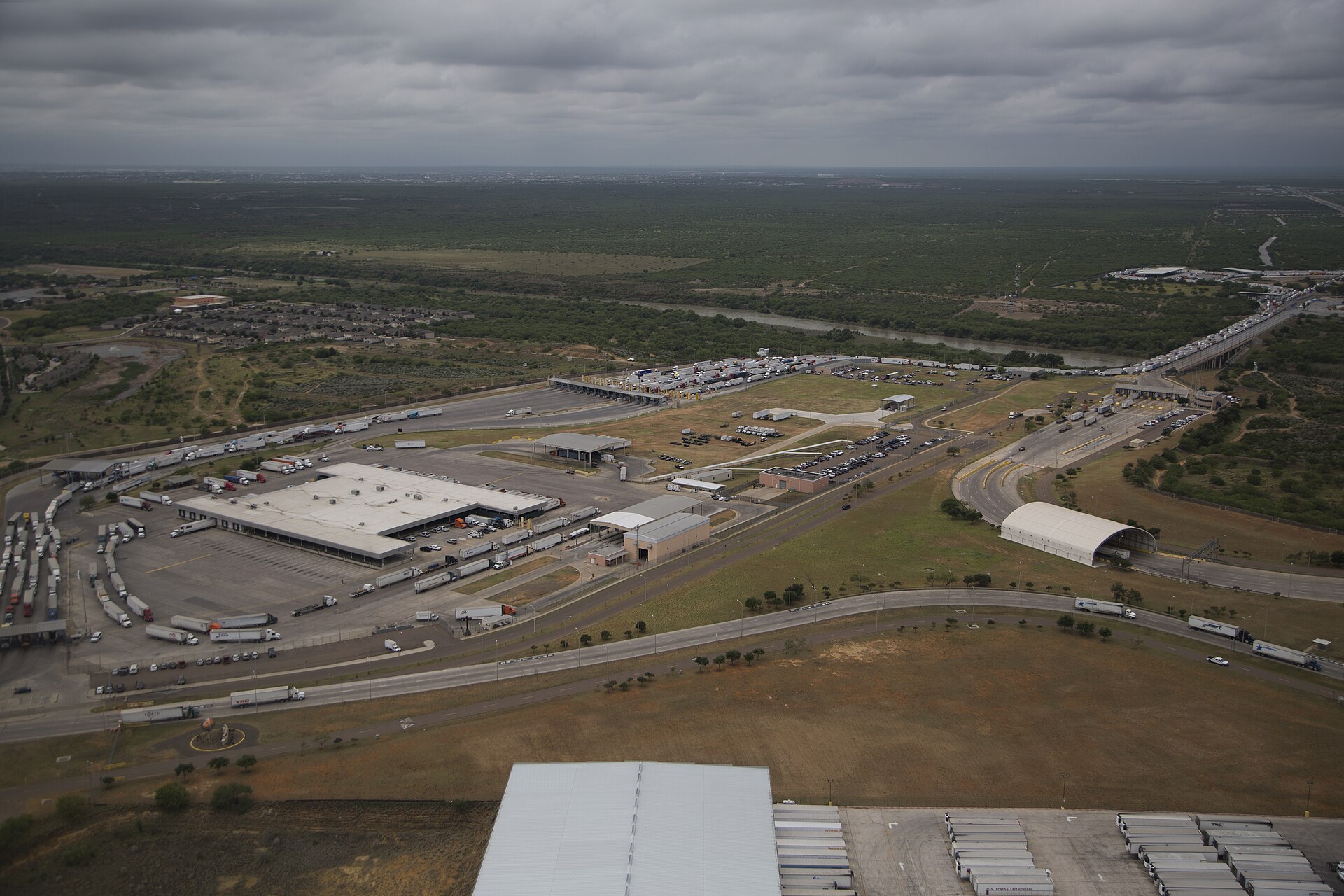
Image: World Trade Crossing International Bridge in Laredo, Texas (35598335330).jpg by U.S. Customs and Border Protection, Public domain, via Wikimedia Commons. Illustrative photo; it does not show the events described.


