


Intel shares fall 29% in worst day since the 1970s after a weak fourth-quarter forecast

Intel shares fell 29% on Friday, October 30, their worst one-day drop since the 1970s, according to CNBC, a day after the chipmaker forecast fourth-quarter revenue of $15 billion to $16 billion against the $17.1 billion analysts had expected. TechCrunch put the decline at about 28%. CNBC reported that the fall took roughly $12 billion off the value of the U.S. government’s stake of about 10% in the company, which is still sitting on a profit.
The selloff followed a quarter that looked solid on its face. Intel reported third-quarter revenue of $16.5 billion, up 21% from $13.7 billion a year earlier, and adjusted earnings of 52 cents a share, against the 40 cents analysts surveyed by LSEG had forecast, CNBC reported. The damage came from the outlook. Intel guided to adjusted earnings of 25 cents a share for the fourth quarter, compared with the 43 cents analysts had expected.
What Intel reported and forecast
Intel’s own earnings release, filed after the market closed on Thursday, shows a company whose businesses are moving in different directions. Data Center and AI revenue rose 78% to $7.3 billion. Intel Foundry, its manufacturing unit, brought in $6.7 billion, up 58%, and lost $1.9 billion at the operating level. The Client Computing and Physical AI Group, which sells chips for PCs, fell 5% to $8.1 billion, and CNBC said that figure missed analyst estimates.
The fourth-quarter guidance is where the margin pressure shows. Intel expects gross margin of 37.1% on a GAAP basis and 38.0% on an adjusted basis, down from 43.0% and 44.1% in the third quarter. It also expects operating expenses of about $4.4 billion on an adjusted basis. In the third quarter the company generated $5.1 billion in cash from operations and, by its own adjusted measure, $1.6 billion in free cash flow.
Chief executive Lip-Bu Tan, who CNBC says was hired in March 2025 to lead a turnaround, described the results as evidence of improving execution and said demand for CPUs remains strong despite headwinds in the PC industry. He also told analysts he was disappointed the company could not meet strong customer demand during the quarter, CNBC reported.
A PC market squeezed by memory costs
Chief financial officer David Zinsner said Intel expects the PC slowdown to last at least through the first half of next year. Tan gave the cause on the call. “Our customers began signaling a PC slowdown based on the memory prices and availability,” he said, according to TechCrunch. Tan added that the price increases were putting pressure on information-technology budgets that were already limited.
Outside data supports the picture. Counterpoint Research reported that global PC shipments fell 4% in the second quarter from a year earlier as memory and component costs rose, according to CNBC. TechCrunch ties the cost increases to the AI industry’s appetite for memory and other components.
The same pressure has reached finished products. TechCrunch reported on June 25 that Apple raised U.S. list prices on Macs and iPads, with the base MacBook Air going from $1,099 to $1,299, and cited rising memory and storage costs. Counterpoint’s Tarun Pathak told TechCrunch at the time that memory prices had more than quadrupled since the fourth quarter of 2025. Lens analysis: Intel’s forecast suggests the effect is now reaching orders for the processors inside those machines, though the company has not published a breakdown that would show it.
Intel’s growth in data centers faces a different limit. TechCrunch notes that expansion there is constrained until Intel adds fab capacity and wins more outside foundry customers, where it competes with Taiwan Semiconductor Manufacturing Co.
The Israeli fab explosion
A second factor is a shutdown at one of Intel’s plants in Israel. An explosion on October 14 at the Kiryat Gat site in southern Israel killed two workers and seriously injured a third, according to The Times of Israel, which reported that one worker died hours after the blast and a 49-year-old man died the next day, per Soroka Medical Center. The third worker, a man in his 20s, was then hospitalized in serious condition.
The cause had not been established when that report was published. The newspaper said the blast was apparently caused by a gas cylinder that exploded at the plant, while Israel’s Fire and Rescue Service said it likely caused a leak of nitrogen trifluoride, a gas that is poisonous if breathed in. The report said there were no apparent suspicions that the blast was an attack. Intel said it was deeply saddened by the loss of two workers and was cooperating with the authorities.
On the earnings call, Zinsner estimated the incident would cost about $600 million in revenue over two quarters, CNBC reported. Tan called it a tragic accident that led to an extended shutdown and hurt shipments of chips made on Intel’s 10-nanometer process.
The government’s stake and a brutal October
The U.S. government’s position dates from August 2025, when Intel said the government would buy 433.3 million new shares at $20.47 each, for $8.9 billion, a stake Intel put at about 9.9%. CBS News, citing the Associated Press and Intel’s announcement, reported that the money came from $5.7 billion in CHIPS Act grants awarded but not yet paid and $3.2 billion from the Secure Enclave program, and that Commerce Secretary Howard Lutnick said the government would hold non-voting shares. CNBC said Nvidia and SoftBank also invested billions last year, and that Intel completed a $23 billion equity offering in August.
Lens analysis: if a $12 billion one-day loss corresponds to a 28% to 29% fall, the stake was worth roughly $41 billion to $43 billion before Friday. That is simple arithmetic on the reported figures, not a number from CNBC or Intel, and it shows how far the holding has risen from the $8.9 billion the government committed.
Intel had been one of the year’s strongest large-cap stocks. CNBC said it was up about 150% for the year before the report, driven by demand for CPUs used in agentic AI work, although it had already dropped about 23% in October on worries about the AI buildout. Bloomberg Línea, reporting on Apple’s rise to the top of the market-value rankings, said Intel lost more than 45% in October, its largest monthly decline in more than 40 years of Bloomberg data. TechCrunch said the shares were still up more than 70% for the year after Friday’s fall.
How the market and analysts reacted
D.A. Davidson downgraded Intel to neutral from buy, writing that it was hard to justify the current valuation multiple given how significant the weakness was, CNBC reported. KeyBanc kept its buy rating but lowered its price target.
The selloff spread. CNBC reported that Nvidia fell 4%, Broadcom more than 5% and Qualcomm 11%, and the Nasdaq Composite slid 2.9% to close a difficult week for technology earnings. Not everyone read it as a turning point. Matt Orton, chief market strategist at Raymond James, told CNBC’s Squawk Box Europe, “I don’t think this is a moment of reckoning,” arguing that fundamentals in the sector remain strong even though positioning is crowded.
The foundry test
The longer-term argument for Intel rests on its manufacturing business. CNBC reported that the company is in high-volume production of its 18A process at a new Arizona fab and presents it as an alternative to TSMC, but that Intel has no major external customers for the chips yet. Tan said he expects a couple of customers to be ready to announce over the next two quarters and described tremendous progress on the next-generation 14A process.
Capacity is a slow variable. The next Arizona fab is not expected to begin operations until the end of 2028, and the first structural truss has only just been installed at the Ohio site, which was originally expected to deliver chips in 2025, according to CNBC. The outlet also recalled September reports that SK Hynix might lease Ohio foundry space to make memory chips, which neither company has confirmed. Zinsner said Intel will not commit capital without clear evidence of customer demand, a more cautious stance than that of Tan’s predecessor, Pat Gelsinger, CNBC noted.
What to watch
Three things will test the market’s reading. The first is whether Intel announces outside foundry customers within the two quarters Tan named. The second is how long memory prices keep PC makers cautious, since Intel’s finance chief has already tied the slowdown to the first half of 2027. The third is the read-across from other chipmakers: AMD reports next week and Nvidia in mid-November, CNBC said.
For now, the figures give two incompatible pictures of the same company. Data center revenue is growing at 78%, and Tan says CPU demand remains strong. Its guidance, meanwhile, points to a fourth quarter with lower revenue than the third and a gross margin about six points below it. The share price on October 30 reflected the second picture.
Sources
- CNBC: Intel stock has worst day since 1970s, wiping about $12 billion off government’s stake (Oct. 30)
- CNBC: Intel third-quarter 2026 earnings report (Oct. 29)
- TechCrunch: Intel’s stock crashes, knocking $12B from government’s stake (Oct. 30)
- Intel Corporation: Intel Reports Third-Quarter 2026 Financial Results
- The Times of Israel: Second worker dies of wounds sustained in Intel plant blast in southern Israel (Oct. 15)
- CBS News: Trump says U.S. government taking a 10% stake in tech giant Intel (Aug. 22, 2025)
- Bloomberg Línea: Apple supera a Nvidia y vuelve a ser la empresa más valiosa del mundo (Oct. 30)
- TechCrunch: Apple raises Mac and iPad prices, spares iPhone for now (June 25)
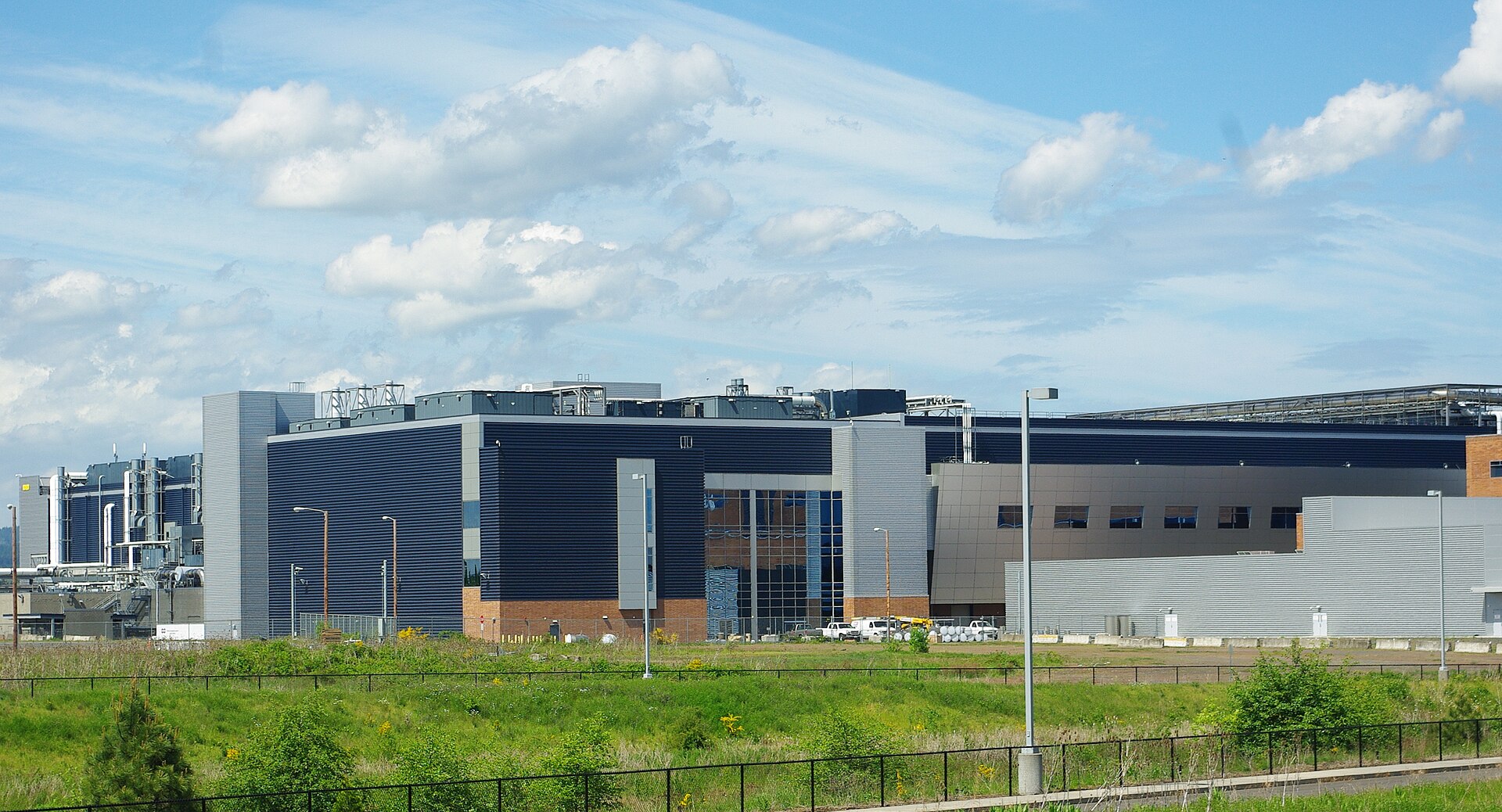
Image: Intel Ronler Acres production.JPG by M.O. Stevens, CC BY 3.0, via Wikimedia Commons. Illustrative photo; it does not show the events described.


