Integza Posts Liquid Rocket Engine Video; LinkedIn Post Describes 3D-Printed Aluminium Engine at About 5 kN

The YouTube channel Integza published a video titled “I FINALLY BUILT a LIQUID ROCKET ENGINE!” on 3 November 2026. A LinkedIn post supplied to Lens says the video shows Integza’s “Tomato Destroyer”, a liquid rocket engine printed in aluminium, fired at the Race to Space competition at Westcott in the UK, with a thrust overlay reaching about 5 kilonewtons (kN). Lens could not retrieve the video’s captions and did not watch it, so the engine details below are the LinkedIn post’s account and were not checked against the video. This post reflects sources as of 14 November 2026.
What the LinkedIn post says
- Engine: a liquid rocket engine called “Tomato Destroyer”, fired at the Race to Space competition at Westcott in the UK (the competition’s own website spells its name Race 2 Space). The post says the thrust overlay in the video reaches about 5 kN.
- Propellants: isopropyl alcohol burned with nitrous oxide, fed from nitrogen-pressurised tanks.
- Design target: 5 kN at a chamber pressure of 30 bar.
- Cooling: the post gives aluminium’s melting point as about 660°C and says the engine survives because of regenerative cooling: the alcohol flows through channels inside the chamber wall before it is injected and burned, the fuel carries the heat away and the wall stays solid.
- Manufacturing: printed in aluminium by laser powder bed fusion, a process that fuses metal powder layer by layer with a laser, which the post says is how the internal channels can exist in one part. The post adds that the powder then had to be cleared out and the sealing faces machined.
- Test history: the post says the early firings did not melt the engine but chamber pressure stayed below 30 bar, so thrust came up short, and that the final run got there.
About the video
The video embedded on this page is Integza’s own upload. YouTube’s page for it lists a publication time of 11:23 a.m. Pacific time on 3 November 2026 (19:23 UTC), a length of 27 minutes 5 seconds and about 2.43 million views on 14 November 2026. Its description links to Race2Space (race2space.org.uk) and ACONITY 3D (aconity3d.com) and invites viewers to send ideas; it does not say what role either organisation had. Lens read the video’s page data and description and did not watch the video.
Race 2 Space and ACONITY3D
Race 2 Space’s website describes it as an international propulsion competition that pairs university teams with industry mentoring. Its 2026 page lists participating universities, one amateur entry (Open Turbopumps) and award winners in six categories; it does not name Integza or an engine called Tomato Destroyer. The site lists Airborne Engineering Ltd and a “Westcott space cluster” among its supporters, but the pages Lens read do not say where the 2026 firings took place and give no engine data. ACONITY3D’s website lists laser powder bed fusion and direct energy deposition among its metal 3D printing processes; the page Lens read does not mention Integza or this engine.
What Lens could not confirm
- Engine details: the name Tomato Destroyer, the propellants, the 5 kN figure, the 30 bar target, the aluminium and the cooling design come only from the LinkedIn post. Lens found no article, press release or team page describing the engine.
- Gaps in the post: it does not give the date of the firing, the aluminium alloy or a measured chamber pressure for the final run, and it does not name or link the video.
- Which video: Lens matched the post to this upload by its title, its date and the Race2Space and ACONITY 3D links in its description, not by anything in the video itself.
Sources and notes
Sources: the YouTube page for the video (title, date, length, view count and description) and YouTube’s embed data; the text of the LinkedIn post, which Lens received without a link or an identified author; the Race 2 Space home page and 2026 page; and the ACONITY3D home page. Lens could not retrieve the video’s captions and did not watch the video, and searches for independent coverage of the engine found none. Every engine detail above is as stated in the LinkedIn post, so this post would need updating if Integza’s own account differs.
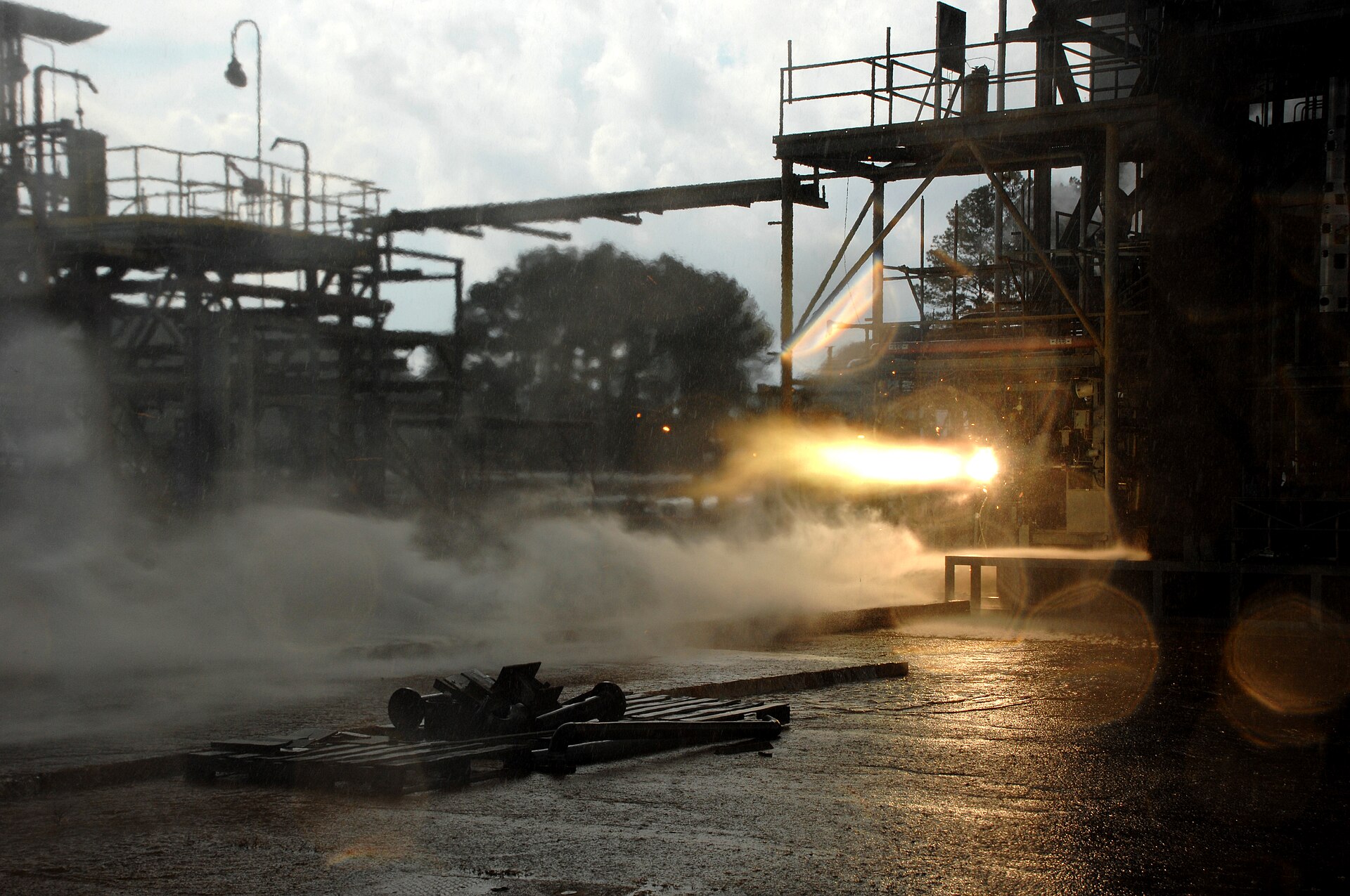
Image: A 3-D printed rocket part during a NASA hot-fire test, August 2013. Photo: NASA/MSFC/David Olive (public domain), via Wikimedia Commons. Stand-in image: not a photo of Integza’s engine, of Race 2 Space or of any engine described in this post.