


China’s AI optical suppliers fall despite a 174% profit jump at Innolight

Zhongji Innolight, which the South China Morning Post calls the industry leader among Chinese optical communications suppliers, reported third-quarter attributable net profit of about RMB 8.59 billion, up about 174 percent from a year earlier, and shares of Chinese optical suppliers still fell sharply on October 30. The South China Morning Post attributed the slide to fears of slower AI growth that outweighed upbeat earnings. Lens could not open that article or two related SCMP pieces because the site returned access errors, so this report relies on exchange-filing summaries, Caixin, Reuters and other sources Lens could open.
The same week, the Chinese GPU designer Moore Threads and the storage maker Biwin Storage published results with fast revenue growth and large cash outflows. Lens analysis: read together, the reports suggest a market that is not rewarding growth rates or profits on their own.
Innolight’s quarter in numbers
Third-quarter revenue was RMB 27.77 billion, up 171.83 percent from a year earlier, and attributable net profit was RMB 8.59 billion, up 173.74 percent, according to a Quartr summary of the company’s filing. Profit excluding non-recurring items was RMB 9.02 billion, up 190.13 percent. At roughly 6.7 yuan to the dollar, the rate Bloomberg’s figures for Moore Threads imply, the quarterly profit is about $1.3 billion. That conversion is a Lens calculation.
For the first nine months, revenue was RMB 69.55 billion, up 178.13 percent, and attributable net profit was RMB 22.24 billion, up 211.81 percent, according to a TipRanks report on the filing, which notes that the third-quarter report is unaudited. IBTimes China, citing City News Service, reports the same quarterly figures rounded to RMB 27.8 billion in revenue and RMB 8.6 billion in profit.
The company credited continued growth in orders and strong demand for high-speed optical modules, which supported shipments of 800-gigabit and 1.6-terabit products, according to Quartr’s summary. IBTimes China describes those modules as links that let thousands of processors communicate during the training of large AI models.
What lifted profit and what dragged it
A Substack analysis that summarizes Citi research gives a more detailed picture. It reports a gross margin of 46.6 percent in the third quarter, against 46.4 percent in the second, and says revenue rose 24.6 percent from the previous quarter while attributable profit rose 8.5 percent. The analysis says profit missed Citi’s estimate by 9 percent and the market consensus by 4 percent.
The gap between operating strength and reported profit came from non-operating items, according to the same analysis. It cites foreign-exchange losses of about RMB 678 million in the quarter, partly from translating the proceeds of the company’s July 30 Hong Kong listing, and a fair-value loss on listed equity investments that cut net profit by about RMB 440 million. IBTimes China also reports that changes in the value of equity investments reduced reported profit.
Citi kept its Buy rating and cut its A-share price target from RMB 1,325 to RMB 1,212, the analysis says. It quotes Citi as calling third-quarter operating profit broadly in line with expectations, and as naming as its key checkpoint whether 2027 order commitments convert into shipments and revenue on schedule. These are analyst views relayed by a third party.
Cash tells a different story from profit. Quartr’s summary lists nine-month operating cash flow of RMB 8.01 billion, up 46.81 percent. Lens arithmetic: that is about 36 percent of the nine-month attributable profit, so a large share of reported profit has not yet turned into cash.
The sell-off
According to an excerpt of the SCMP article, optical stocks extended a two-day sell-off on Friday, October 30, despite upbeat quarterly results driven by the global AI infrastructure boom. In morning trading in Shenzhen, Eoptolink fell as much as 15 percent, TFC Communication 10.3 percent and Innolight more than 7 percent, before some losses were recovered.
Caixin, in an October 30 report by Ge Haoyue, says the three leading optical-module makers reported strong earnings growth for the first three quarters and still saw their shares fall sharply, which it ties to investor doubt that global tech companies’ AI spending will produce lasting returns for suppliers. A summary section on Caixin’s page, which the site labels AI-generated, lists closing declines of 8.5 percent for Innolight, 11.1 percent for Eoptolink and 19.8 percent for TFC. Lens could not confirm those figures against exchange data.
The slide did not start on October 30. A market report relayed by the German site Ad-hoc-news, citing Xinhua and Trading Economics, says the Shenzhen Component fell about 3 percent on October 22, with Eoptolink down 12.3 percent and Innolight down 8.8 percent. The report links that drop to Nvidia’s statement that it would work with Taiwan-based partners to expand optical-module capacity fifteen-fold by mid-2027, with no mainland companies among those named.
Reuters reported on October 28 that Innolight and Eoptolink are down roughly 60 percent from their June and July highs. It names Washington’s move toward barring both companies from supplying US data centers as one factor, along with lofty valuations, worries about AI demand and export curbs. Reuters adds that traders saw no single obvious trigger and that the STAR50 index of mainland AI and semiconductor companies has fallen 40 percent in under four months.
Moore Threads and Biwin: revenue up, cash out
Moore Threads reported third-quarter revenue of about RMB 1.6 billion, up 1,773.92 percent, according to Bloomberg figures carried by AI Weekly. AI Chat Daily gives the same growth rate and puts the revenue at RMB 1.55 billion, a gap Lens could not reconcile. Net profit attributable to shareholders was RMB 49.26 million, the company’s first quarterly profit, more than a year ahead of its 2027 target, Bloomberg said. Excluding non-recurring items, profit was RMB 20.07 million, AI Chat Daily reports.
The cash figures are weaker. For the first nine months, AI Chat Daily reports, operating cash outflow was RMB 3.31 billion, against RMB 3.29 billion of revenue and an outflow of RMB 1.50 billion a year earlier. Inventory rose to RMB 3.36 billion from RMB 1.33 billion at the end of 2025, cash fell from RMB 9.18 billion to RMB 5.39 billion, and long-term borrowings rose to RMB 3.65 billion from RMB 1.49 billion. The company attributed the cash gap to expanded production and deliberate inventory buildup, the report says.
Moore Threads closed at 381.50 yuan on October 28, about 59 percent below its December 11, 2025 closing peak of 941.08 yuan, according to AI Chat Daily. Reuters says Moore Threads and MetaX Integrated Circuits, which rose 400 percent and 700 percent on their debuts last year, have both roughly halved since July.
Biwin Storage, according to Wall Street News’s October 28 report, had third-quarter revenue of RMB 6.142 billion, up 130.67 percent, and attributable net profit of RMB 1.602 billion, up 525.34 percent from a year earlier but down about 62.5 percent from the second quarter’s RMB 4.267 billion. Nine-month operating cash flow was negative RMB 10.04 billion, against negative RMB 1.48 billion a year earlier, which the company attributed mainly to higher purchasing spending. Inventory reached RMB 24.05 billion from RMB 7.87 billion at the end of 2025.
The report credits AI computing demand and the storage industry’s upturn, and cautions that a single-quarter profit decline does not by itself signal a reversal in the storage cycle. SCMP’s October 29 headline said both Biwin and Moore Threads saw stocks plunge despite the revenue surge. Lens could not open that article and found no price data for either stock after October 28, so the size of the moves is unconfirmed.
What investors appear to be weighing
Lens analysis: the three sets of results share a pattern. Revenue and profit are growing at triple-digit rates, but the growth is being financed by working capital, in the form of inventory, prepayments and borrowing, and by supplier commitments for future AI hardware demand. A market that is already worried about whether AI spending will pay off may be asking whether those inventories turn into sales, instead of reacting to the headline growth rates.
Lens analysis: Innolight’s own growth rate also points to a slowdown from its earlier pace. Its third-quarter profit growth of 173.74 percent compares with 211.81 percent for the first nine months, as the company’s filing summaries show. The sources do not say that investors acted on that gap.
Reuters quotes the fund manager Dong Baozhen describing the earlier rally as a speculative crazy bull, and says some analysts see the fall as healthy. The same report says Goldman Sachs had included Innolight on a recommendation list it published earlier in October.
What to watch
For Innolight, the question named by Citi is whether the 2027 order commitments become shipments on schedule. A further question is whether Washington follows through on the move Reuters describes toward barring Innolight and Eoptolink from supplying US data centers, which would cut them off from those customers.
For Moore Threads and Biwin, the next filings will show whether inventory converts into sales and whether operating cash flow stops widening. The October 28 data leave open whether the build-up reflects confidence in demand or a risk the companies have taken on.
Sources
- Quartr: Zhongji Innolight Q3 2026 summary
- TipRanks: Zhongji InnoLight posts surging revenue and profit in third-quarter 2026 report
- IBTimes China: China’s AI Optical Chip Supplier Zhongji Innolight Reports 174% Profit Surge
- Substack: Zhongji Innolight Q3 deep dive (summarizing Citi research)
- Caixin Global: China Optical Module Stocks Slump Despite Surging Earnings
- Success Stories News: excerpt of SCMP, China’s optical suppliers extend sell-off as fears of slower AI growth trump upbeat earnings
- The Daily Star (Reuters): In China, the AI bubble has already burst
- AI Weekly (Bloomberg): Moore Threads Posts First Profit as Q3 Revenue Jumps 1,774%
- AI Chat Daily: Chinese GPU maker Moore Threads swings to Q3 profit
- Wall Street News (Chinese): Biwin Storage Q3 results
- Ad-hoc-news: Shenzhen Component closes 3.0 percent lower on AI hardware rout
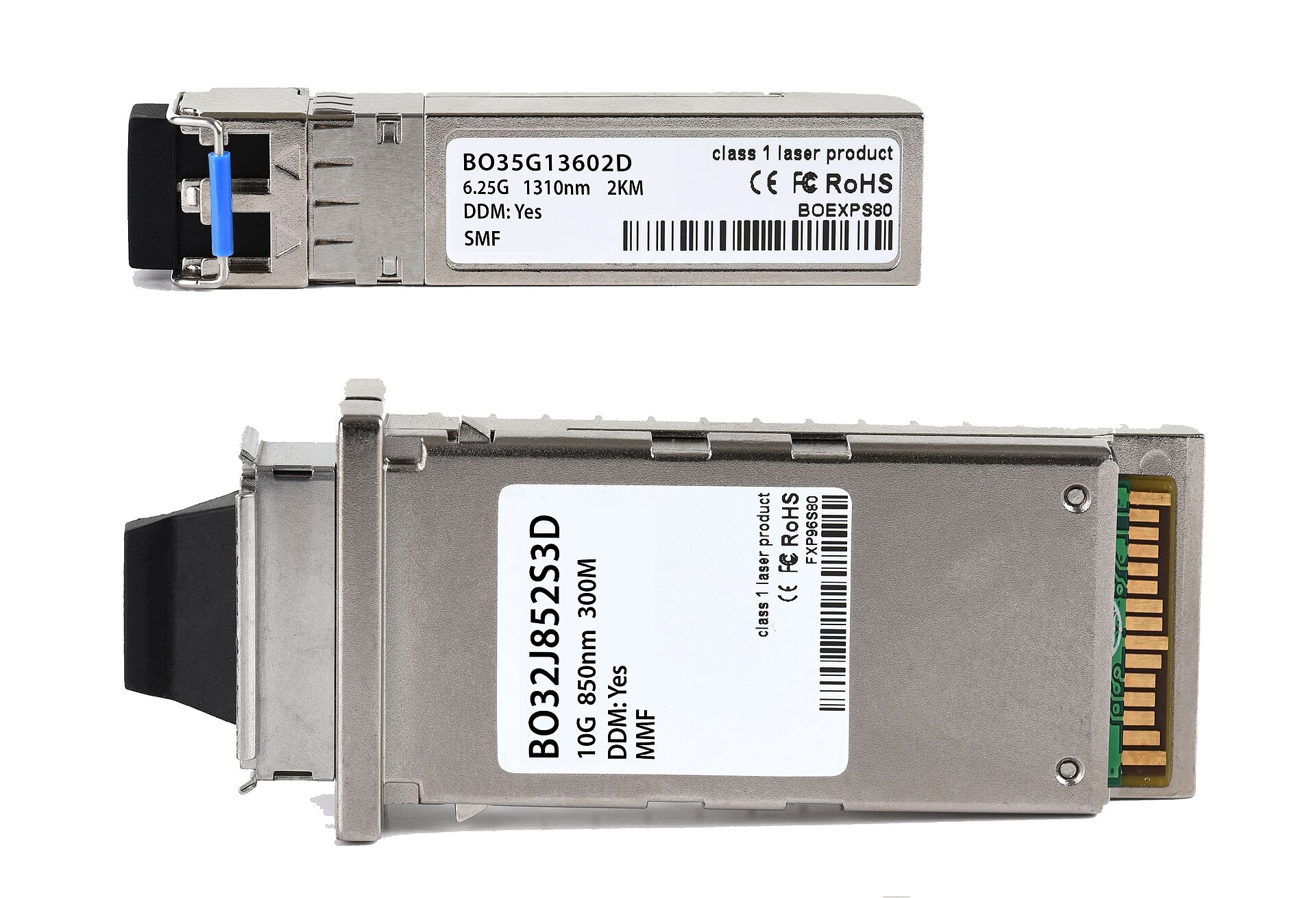
Image: X2 vs SFP+ optical transceiver.jpg by Martijn Boer, Public domain, via Wikimedia Commons. Illustrative photo; it does not show the events described.


