


Hydrogen Aviation Start-ups Turn to Defense and Data Centers for Near-Term Revenue

Several hydrogen aviation start-ups are turning to defense, data-center power and airport ground equipment for near-term revenue while hydrogen airliners remain years away, Aviation International News reported on November 12, 2026. The report is based on remarks at HySky Society’s Flying Hy 2026 virtual symposium on November 4.
Companies named
- ZeroAvia (UK): small fuel-cell drones are flying in Ukraine, and the company aims to scale its fuel cells for larger military aircraft after announcing a defense collaboration with Marshall Aerospace in July 2026. Its 200 kW fuel-cell power generation system should reach first deliveries in 2027, with series production at the end of 2029. AIN reports it closed its Everett, Washington R&D facility, cut about half its workforce and changed leadership; chief executive Christine Ourmières-Widener said: “We have now a strong demand and expectation from defense.”
- Hydroplane (Los Angeles): founder and chief executive Anita Sengupta said: “We’ve been largely funded by the military.” An Air Force Agility Prime contract helped launch the company, and it has Army and Marine Corps contracts. It offers a ground version of its fuel cell to replace diesel generators and expects its first annual profit this year.
- Millennium Reign Energy (Dayton, Ohio): says it powered “the first ever data center that ran on hydrogen” in southern Ohio “last December” and is working with an unnamed developer on 1 to 10 MW data centers.
- FC Renew (Knoxville, Tennessee): targets military drones with a fuel-cell catalyst it says lasted 28,000 hours in accelerated stress tests, against 4,000 to 10,000 hours for conventional catalysts. The U.S. Army is among its backers.
Context in the report
- Universal Hydrogen ran out of cash and closed in 2024, and Australia’s Stralis Aircraft abandoned hydrogen propulsion in August 2026 after failing to secure funding, AIN reports.
- Airbus acknowledged in February 2025 that its ZeroE hydrogen airliner would miss its 2035 target and has not set a new date.
- The FAA’s December 2024 roadmap calls non-propulsive uses such as auxiliary and emergency power “the most mature concept for commercial aviation,” and formal hydrogen regulations are not expected until 2028 to 2032.
What the report does not include
AIN gives no funding amounts, contract values or valuations for any company, and does not name the data-center developer or the maker of the fuel-cell drones in Ukraine.
Sources and notes
This post is based on AIN’s article by Hanneke Weitering, published November 12, 2026. Lens read it as extracted text, did not attend or watch the symposium, and did not contact the companies. Company claims, including FC Renew’s test results and Millennium Reign’s data-center claim, are reported as the companies stated them.
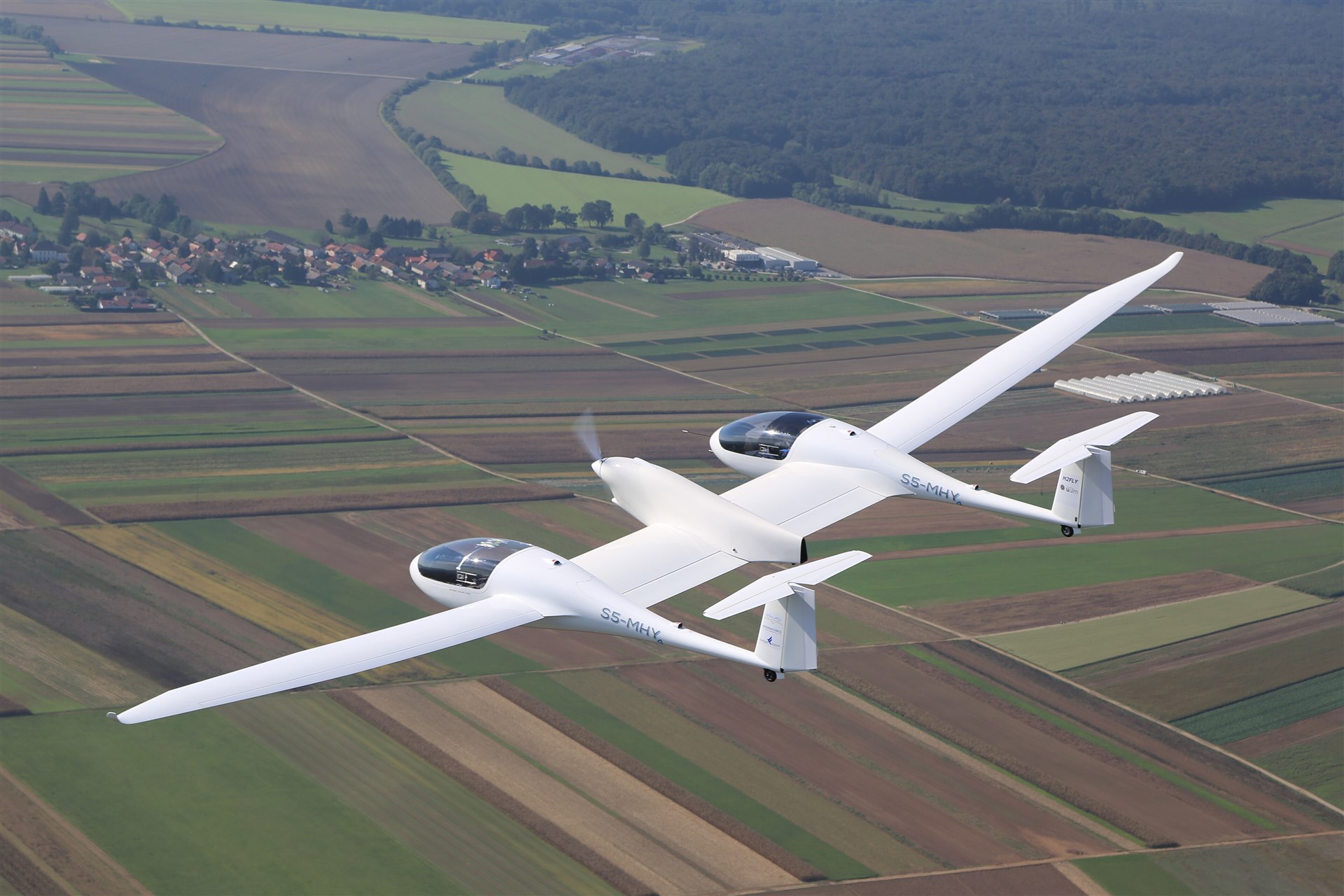
Image: the HY4 hydrogen fuel-cell aircraft in flight in 2016, Jean-Marie Urlacher, CC BY-SA 4.0, via Wikimedia Commons. The HY4 is shown for illustration and was not developed by the companies named above.

