How Russian Su-30SM Fighters Have Been Reported Shot Down: Weapons Claimed in Four Cases Since 2024, and What Is Confirmed
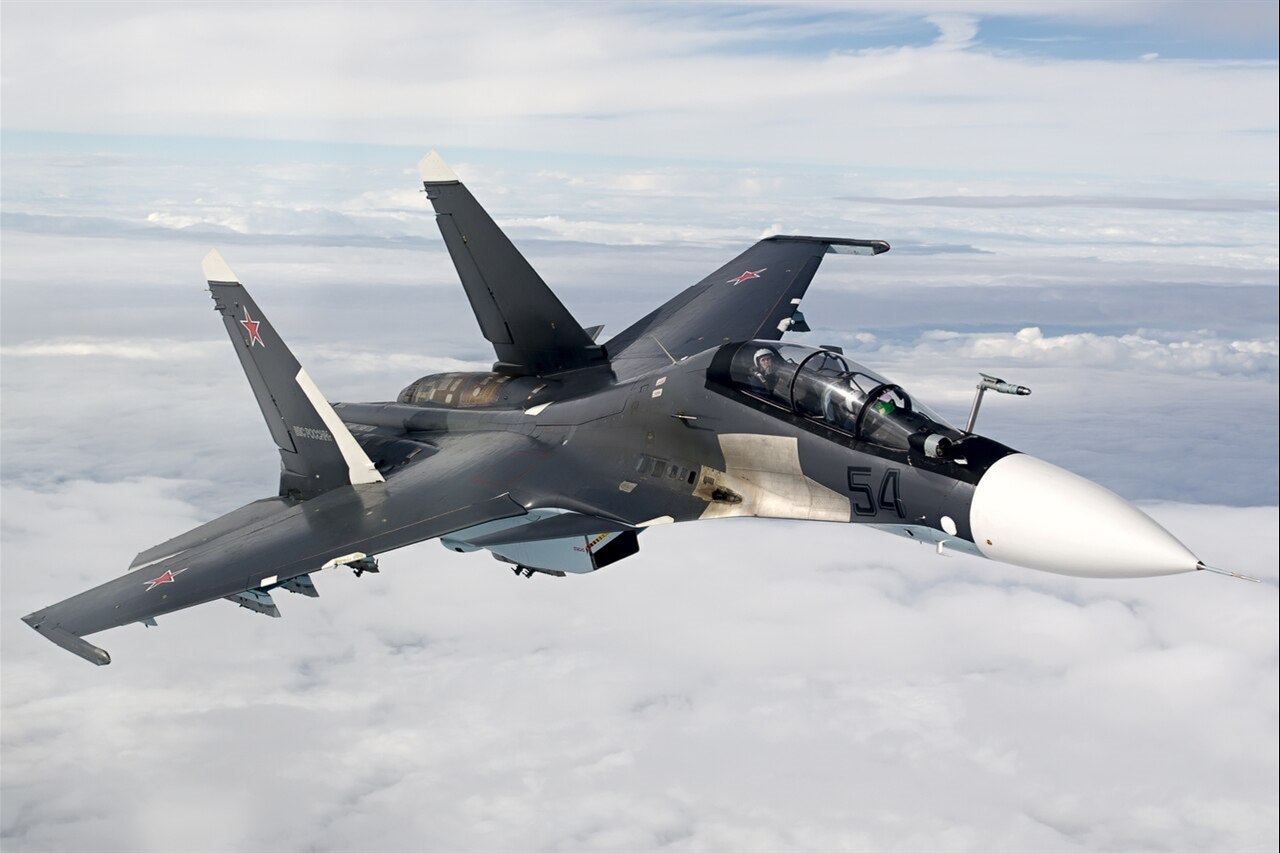

Ukrainian officials and outlets have attributed the loss of Russian Su-30SM two-seat fighters to four different causes since September 2024: a shoulder-launched missile, an air-to-air missile fired from a naval drone, Russian air defenses firing on their own aircraft and, in an unofficial claim, a Patriot missile system. Parked aircraft have also been struck by drones, and several Su-30 crashes have been reported with no shootdown claimed. None of the reports Lens read cites a Russian official statement that a Su-30SM was shot down. Lens searched for a shootdown reported in the past several days and found none, so this post sets out the cases reported so far, what each source says and what remains unconfirmed.
The claims at a glance
- September 11, 2024: a man-portable air-defense missile over the Black Sea, according to Ukraine’s military intelligence directorate (HUR).
- May 2, 2025: a missile launched from a Magura naval drone near Novorossiysk, according to HUR.
- October 17, 2025: Russian air defenses over northwestern Crimea, according to Ukraine’s General Staff and Navy.
- Late January 2026: a Patriot system, according to an unofficial claim attributed to the head of Ukraine’s Center for Countering Disinformation.
September 11, 2024: shoulder-launched missile
HUR said Ukrainian special forces brought down a Su-30SM with a man-portable air-defense missile of an undisclosed type over the Black Sea, according to The War Zone (TWZ), which reported it on September 12, 2024. Per HUR, Russia lost contact with the jet at about 5 a.m. on September 11 while it was reportedly attacking an oil platform, and Russian searchers found “a characteristic stain of aviation fuel in the sea” about 45 miles northwest of Cape Tarkhankut. HUR said the jet belonged to the 43rd Independent Naval Assault Aviation Regiment and put its value at about $50 million. TWZ wrote that the video “doesn’t provide concrete evidence of a missile shot downing the jet, as far as we can tell,” and said reports that the missile was fired from a boat belonging to HUR were unconfirmed. The pro-Russian Rybar Telegram channel said one of the aircraft sent to the area “fell to a man-portable air defense system,” and unofficial Russian channels confirmed that a Su-30SM was lost on a combat mission in the area, TWZ reported. The Ukrainian channel Monitor said there was no information on the fate of the two crew members.
May 2, 2025: missile from a naval drone
HUR said on May 3, 2025 that its Group 13, working with the Security Service of Ukraine and the Defense Forces, destroyed a Russian Su-30 near the port of Novorossiysk with “a missile launched from a Magura naval drone platform,” and called it “the first time in history that a naval drone has destroyed a manned combat aircraft.” HUR’s page said the jet was “engulfed in flames mid-air before crashing into the sea.” It did not name the missile. The Aviationist reported on May 5 that initial reports named the Magura V5 but that it “has now been confirmed that the aircraft were downed by the Magura V7,” citing Naval News, which wrote that “a Sidewinder-armed Magura V7 surface drone (USV) shot down two Russian Su-30 FLANKER jets.” The Aviationist said a second jet went down “a few days later” in the same way; HUR’s post, as the article describes it, refers to one Su-30. The article says the V5 had earlier been associated with R-73 missiles and that the V7 “appears to be armed with AIM-9 Sidewinder missiles.” It reports no Russian comment.
October 17, 2025: Russian air defenses, according to Ukraine
Ukraine’s General Staff said Navy intelligence intercepted radio communications about “the ignition of two engines and the ejection of the crew” of a Su-30SM over northwestern Crimea, and that Russian forces “probably shot down its own multi-role fighter” while repelling a Ukrainian drone attack, according to Ukrinform, which reported it on October 17, 2025. Navy spokesperson Dmytro Pletenchuk said: “They were repelling Ukrainian attacks so actively that they ended up shooting down their own plane,” according to The Moscow Times. Militarnyi reported that Russian aviation bloggers said a missile was fired at a drone and a fire then broke out on board that the crew could not control, and that the Russian side was reportedly weighing several causes: a technical malfunction, a missile exploding soon after launch, debris from a drone or from the jet’s own air-defense missile, or a mid-air collision with a drone. The Moscow Times said Russian authorities had not commented, and that pro-war Telegram channels acknowledged the loss, said the cause was unknown and said the crew ejected and were rescued.
Late January 2026: a Patriot claim that stayed unofficial
Andriy Kovalenko, who heads Ukraine’s Center for Countering Disinformation, said on Telegram that Russia had lost a Su-30 and a Su-34. Caliber.az paraphrased him on January 29, 2026 as saying the Su-30 “was likely shot down using a Patriot surface-to-air missile system,” and said reports in Ukraine suggested Ukrainian forces may have struck a Russian aircraft over the Black Sea near Snake Island. Caliber.az said the information was “spreading at an unofficial level” and that confirmation from the Air Force or the General Staff was awaited. Euromaidan Press, in its report of the same day, said Kovalenko “did not disclose details about the circumstances” and named no weapon. It said the General Staff confirmed “the elimination of one Russian aircraft” without naming the type, raising its tally to 435, and that the AviVector channel said the Su-34 crashed in Russia’s Kursk region because of a technical malfunction.
Strikes on parked aircraft
- Militarnyi’s tally, as relayed by Euromaidan Press, counts three Su-30SMs destroyed and one damaged in a Ukrainian strike on Saky airfield in Crimea on August 9, 2022, and one damaged by a UJ-26 Bober drone at the same base on July 1, 2025.
- On August 23, 2026, Ukraine’s Unmanned Systems Forces said they struck Su-30SM and MiG-29 fighters at Vityazevo airfield in Krasnodar Krai. Militarnyi, working from footage published by the force’s commander, Robert “Madyar” Brovdi, wrote that the drone “failed to hit the aircraft directly, exploding nearby and starting a fire” on the Su-30SM, and that the MiG-29 was hit directly, causing “a major fire.” The unit first identified the jet as a Su-33; Militarnyi concluded from the cockpit hump that it was a Su-30SM. The article cites no independent post-strike imagery and no Russian statement. Its remark that even this strike could put the fighter out of service “for an extended period” is the author’s assessment.
Crashes with no shootdown claimed
- August 14, 2025: a Su-30SM crashed southeast of Snake Island “under still-unclear circumstances while on a combat mission,” according to Defense Express, quoted by Euromaidan Press.
- April 3, 2026: a Su-30 crashed in Crimea during what Russia’s defense ministry called a scheduled training flight, according to Interfax as cited by Euromaidan Press. The ministry said both crew members ejected and were recovered and gave no cause. The Fighterbomber channel attributed it to an engine fire, which Euromaidan Press said was not officially confirmed.
- October 21, 2026: a Su-30SM crashed in Russia’s Kaliningrad region. According to Ukrainska Pravda, Russia’s defense ministry said, “The crew ejected, there is no threat to the lives of the pilots,” and that the flight was carried out without ammunition. Militarnyi reported on November 1 that a second Su-30 was damaged in the same incident, with significant wing damage, based on photos published by the OSINT Bees group, and wrote that the crash “may have resulted from a midair collision.” Militarnyi also reported on October 21 that another Su-30SM, reportedly of the Russian Navy, “likely crashed” and that its two pilots were likely killed, citing posts by Russian aviation-linked Telegram channels; the article does not independently confirm either claim.
Militarnyi’s count of one regiment
Militarnyi, as relayed by Euromaidan Press on August 15, 2025, said the 43rd Naval Assault Aviation Regiment at Saky began 2022 with 12 Su-30SMs and had since lost seven in confirmed incidents, with two more damaged. Its list was: March 5, 2022 (over Mykolaiv region, both crew ejected and were captured); August 9, 2022 (three destroyed at Saky); September 11, 2024; May 2, 2025; and August 14, 2025 (included although the cause is unclear). Euromaidan Press said it could not independently verify the figures.
What is not established
None of the reports Lens read includes a Russian statement confirming that any Su-30SM was shot down by Ukrainian weapons. The 2024 video does not show the missile hit, according to TWZ. Reports differ on whether the May 2025 drone was a Magura V5 or V7 and whether the missile was an R-73 or an AIM-9, and on whether one or two jets were lost. The Patriot claim from January 2026 was unofficial, and the two reports Lens read differ on whether Kovalenko named the weapon. The reports Lens read do not give a total number of Su-30SMs Russia has lost or operates.
Sources and notes
Sources: The War Zone, September 12, 2024; HUR, May 3, 2025; The Aviationist, May 5, 2025; Ukrinform, October 17, 2025; Militarnyi, October 17, 2025; The Moscow Times, October 17, 2025; Caliber.az, January 29, 2026; Euromaidan Press, January 29, 2026; Euromaidan Press, August 15, 2025; Euromaidan Press, April 3, 2026; Militarnyi, August 23, 2026; Ukrainska Pravda, October 21, 2026; Militarnyi, October 21, 2026; and Militarnyi, November 1, 2026. Lens read these pages through automated page summaries. Accounts of shootdowns rest on Ukrainian official and media claims, and Russian-side accounts of losses come from Telegram channels, apart from the defense ministry statements on the April and October 2026 crashes. Lens did not read Naval News, CNN or the Russian defense ministry’s own statements directly. Lens did not contact either side. This post is an overview of reported cases, not a report of a single new incident.
Image: a Russian Air Force Sukhoi Su-30SM in flight, photographed in August 2014. Photo: Alex Beltyukov, CC BY-SA 3.0, via Wikimedia Commons. File photo: it does not show any of the incidents described.