Firestorm Labs Reports $82 Million Series B, $100 Million Air Force Contract Ceiling and $30 Million APFIT Award
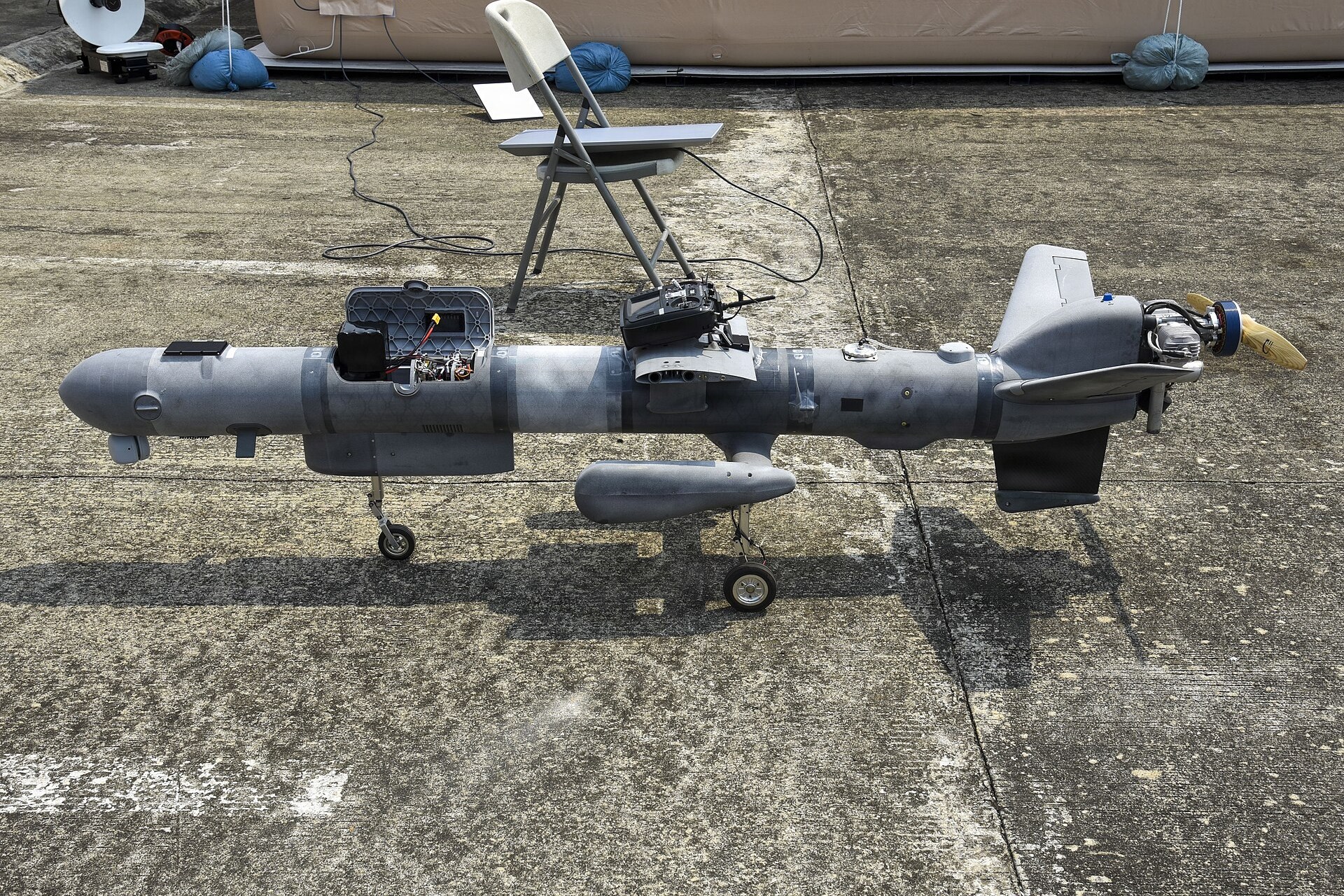

Firestorm Labs, a San Diego company that makes 3D-printed drones and shipping-container factories to print them, announced an $82 million Series B round on 29 April 2026, led by Washington Harbour Partners. The company says its total funding is $153 million. It holds a US Air Force contract with a $100 million ceiling and, according to a company announcement reported by Tectonic Defense, a $30 million award under the Pentagon’s APFIT program (Accelerate the Procurement and Fielding of Innovative Technologies).
Funding
According to Firestorm’s release, NEA, In-Q-Tel, Lockheed Martin Ventures, Booz Allen Ventures and others joined the round. TechCrunch and Washington Technology reported the same lead and amount. None of the articles Lens read gives a valuation. The release puts total funding to date at $153 million, and TechCrunch repeats the figure.
Products: xCell and Tempest
The company describes xCell as a containerized manufacturing unit that prints drones and parts near where they are used. Washington Technology reported that each xCell spans two containers with 3D printers supplied by HP. CEO Dan Magy told TechCrunch that weapons are not printed but added separately.
TechCrunch stated, without naming a source, that xCell can print drone systems in under 24 hours. Defence Blog attributed a similar figure to the company. NewsNation reported on 16 July 2026 that chief technology officer Ian Muceus said a full build can take as little as about six and a half hours and can produce 50 small drones or about half of a large Tempest.
Firestorm’s website describes Tempest as a modular Group 2/3 unmanned aircraft system designed for xCell production. It does not use the name Tempest 50, which appears in January 2025 coverage, and Lens could not read the specification values behind its specifications links. Every source Lens read that gave a Tempest payload put it at 10 pounds (4.5 kilograms).
Air Force contract and APFIT award
The Air Force contract is an IDIQ (indefinite delivery, indefinite quantity): a maximum value, with amounts set by later task orders. Firestorm’s release of 23 January 2025 describes a five-year, $100 million IDIQ for developing or buying additively manufactured unmanned aerial systems and autonomy, open to orders from across the US government. A Department of Defense announcement of December 2024, as reproduced by HigherGov, describes a $100 million sole-source Small Business Innovation Research Phase III IDIQ for small unmanned aerial systems, support services and research and development. It says $5,000 was obligated at award and work is expected to finish by 16 December 2031.
The company release names xCell but not Tempest, and the Department of Defense text as reproduced names neither. HigherGov’s record for the contract refers to Tempest integration, and Defense Daily’s first paragraph refers to the Tempest drone. None names the Tempest 50, which The Defense Post, UAS Vision and Army Recognition tied to the award in January 2025.
According to Tectonic Defense, which received an exclusive release on 7 May 2026, Firestorm announced a $30 million APFIT award, which can rise to $50 million, for five xCell units, more than 200 Tempest drones and operator training for an undisclosed Indo-Pacific customer. The company says about $26 million has been obligated across five task orders and that deliveries have begun. Lens found no Department of Defense statement on it.
Where reports differ
- Tempest endurance. The Defense Post (8 January 2025) said the Tempest 50 can deploy for up to 36 hours, with no source named; Army Recognition (15 January 2025) gave the same figure. Defense Tech Signals (11 March 2025) used 36 hours for build time: nine hours to print and 36 to assemble, per the company. Army Recognition (14 October 2025) gave 1 to 6 hours for Tempest, and Tectonic Defense (29 April and 7 May 2026) gave six hours.
- Tempest range. Tectonic Defense and NewsNation: 400 miles. AFCEA SIGNAL (2025): 115 miles for a turbojet Tempest 50.
- Obligated under the Air Force contract. $5,000 at award (Department of Defense announcement as reproduced); $27 million (TechCrunch, 29 April 2026); $28.7 million across task orders (HigherGov, July 2026).
- Total funding. $153 million (company release). The $12.5 million seed (Tectonic Defense), $47 million Series A (Washington Technology) and $82 million Series B add to $141.5 million (Lens arithmetic); the sources do not itemize the difference.
- xCell units deployed. TechCrunch (29 April 2026), citing Magy: two in the US. NewsNation (16 July 2026): around a dozen in the Philippines, Hawaii and across the US.
Sources and notes
Figures are as reported as of 15 November 2026, and the latest coverage Lens found is dated 16 July 2026. Read in full: the Series B release on Access Newswire and the Air Force contract release on PR Newswire; TechCrunch and Washington Technology on the Series B; Tectonic Defense on the Series B and Tectonic Defense on APFIT; Defence Blog, OODA Loop and Army Recognition on APFIT; HigherGov (federal contract record and Department of Defense announcement text); The Defense Post, UAS Vision, Army Recognition (January 2025) and Army Recognition (October 2025) on the Tempest; Defense Tech Signals, AFCEA SIGNAL, 3Dnatives and NewsNation for other details. The company’s website was read through a summary tool, and its specification values were not visible. Defense Daily was read only to its first paragraph, the rest being subscriber-only. Army Recognition dated the APFIT award 8 May 2026, while Tectonic Defense and OODA Loop dated the announcement 7 May. Could not be opened (access denied or failed): the Department of Defense and Department of War contract announcement pages, the GlobeNewswire release on the APFIT award, GovConWire, the San Diego Business Journal, 3DPrinting.com, Axios and Voxelmatters. The 18 December 2024 date for the Department of Defense announcement, and totals of $131.5 million and about $159.5 million on other websites, appeared only in search summaries. A graphic bearing the Silent VC name lists several of these figures. The website of Silent Ventures lists Firestorm among its portfolio companies. Lens checked each figure against the sources above: the Series B size, lead, total, contract ceiling and 10-pound payload match, while its 36-hour endurance matches only some 2025 coverage and its under-24-hours claim refers to what xCell prints.
Image: A Firestorm Tempest drone staged for preflight checks with an access hatch open on its body, during Exercise Balikatan 2026 at Cagayan North International Airport in the Philippines, 23 April 2026. Photo: Cpl. Ernesto Lagunes, U.S. Marine Corps (public domain), via Wikimedia Commons; cropped.