


China Says HQ-9B Unit Intercepted Two Missile Targets in Exercise; Reports Differ on Whether They Were Ballistic
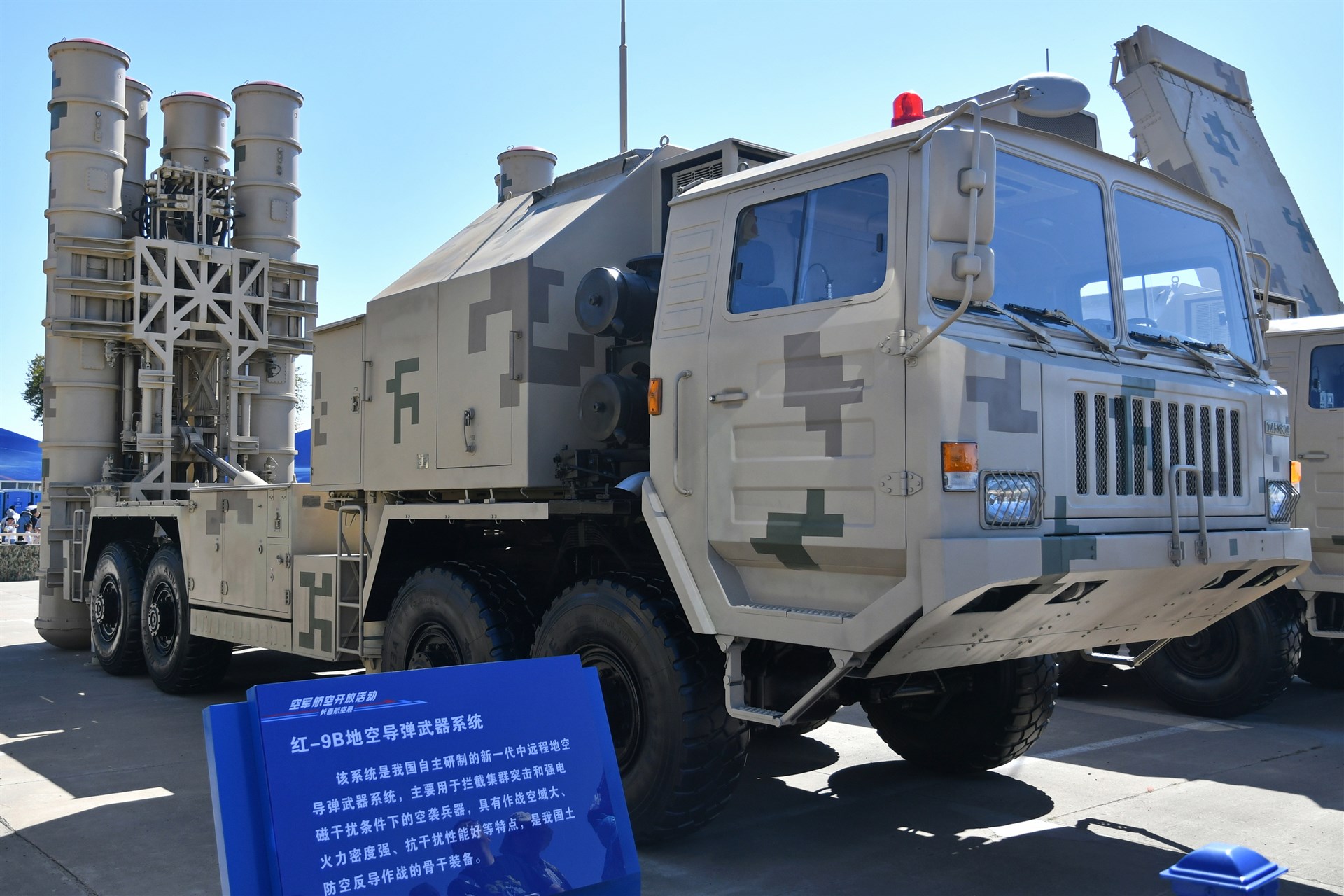

Chinese state broadcaster CCTV reported on November 2, 2026 that an air defense unit of the Central Theater Command Air Force intercepted two missile targets at the same time during a weapons-verification exercise, according to Janes. Janes reported that one target changed direction as it entered the defended area and that CCTV said it was the first time the battalion had intercepted two new targets at once. Footage showed the “Shenwei Missile Battalion.” Global Times identified the system as the HQ-9B in a report the same day. Defense Express wrote on November 4 that China claims the HQ-9B can now intercept ballistic missiles.
What was reported
- Global Times (Lu Wenao, November 2): the battalion intercepted “two new types of missile targets,” described as including ballistic missiles and “one missile that suddenly changed direction during flight.” A battalion member said the unit knew of “several types of targets, including ballistic missiles,” before the mission, and another member, Hu Yang, said via CCTV that the time from target warning to interception could be as short as two minutes.
- Janes (Sohini Mandal, November 3): CCTV did not identify the air defense system or the targets. Janes attributes the HQ-9B identification to Global Times and does not independently confirm it. CCTV’s report gave no date for the exercise.
- Commentator Song Zhongping told Global Times: “Intercepting a maneuvering ballistic missile becomes more difficult.” He said the active radar seeker must track and lock onto the warhead, including through thrust-vector control, when a target changes trajectory, and that “intercepting hypersonic weapons in the true sense is also possible.” Janes relayed his point that a maneuvering target would require the interceptor to keep radar lock through a course change.
Where the accounts differ
Global Times uses the phrase “ballistic missiles” in its lead and in remarks from a battalion member and from Song, but it does not explicitly classify the maneuvering target as ballistic. Janes does not say the targets were ballistic missiles. Neither report gives target speeds, altitudes, the exercise date or its location. Defense Express writes the commentator’s name as “Sun Zhongping”; Global Times and Janes spell it Song Zhongping. Defense Express describes his comment as conditional on “rapid reaction of SAM crew and constant radar tracking of target” and says there had been “no public claims” of a ballistic-missile capability for the HQ-9B before; Lens could not verify that.
The buyers named
Defense Express says the HQ-9 family, which may be marketed for export as the FD-2000, is bought by three former customers for Russian arms: Serbia, Azerbaijan and Uzbekistan. Its headline says they are buying it over the Russian S-400, but the article body gives no example of a buyer choosing one system over the other and calls its expectation of lower Russian demand a “logical assumption.” Its evidence for Serbia and Azerbaijan is links to other Defense Express articles, and for Uzbekistan a photo caption.
Other reporting, which Lens saw only as search-result summaries: Overt Defense and Militarnyi reported in November 2025 that Azerbaijan had an HQ-9B (FD-2000B) in service, based on imagery from a parade rehearsal, with no official announcement found; the CACI Analyst says China supplied FD-2000 systems to Uzbekistan in 2015 under contracts signed in 2013; and SCMP reports that Serbia operates four FK-3 batteries, the export form of the HQ-22.
Inventory figures
Defense Express gives these Chinese launcher counts without a source: S-300PMU 32, S-300PMU1 64, S-300PMU2 120 and S-400 32 (together 248 Russian-made launchers), HQ-9 196 and HQ-9B 96 (292 domestic launchers), and 130 HQ-22 launchers listed separately.
Sources and notes
Sources: Global Times, Lu Wenao, November 2, 2026; Janes, Sohini Mandal, November 3, 2026; Defense Express, Ivan Kyrychevskiy, November 4, 2026. Notes: the visible text of the Janes page ends at a subscription prompt. An SCMP report on the exercise returned an error (HTTP 403) and was not read. The buyer reports from Overt Defense, Militarnyi, the CACI Analyst and SCMP were seen only as summaries in search results. Defense Express cites Janes and Global Times secondhand and gives no date for the exercise. Both Chinese-side accounts rely on CCTV and Global Times, with no independent verification of the targets or results. Thumbnail photo: “HQ-9B 20250921.jpg” by 颐园居, CC BY-SA 4.0, photographed September 21, 2025, via Wikimedia Commons; cropped. It shows an HQ-9B launcher on display, as the sign in the photo says, and not the exercise.
Image: 颐园居 via Wikimedia Commons (CC BY-SA 4.0).

