


AWS growth accelerates to 39% as Jassy sets a $1 trillion goal and Amazon keeps spending

Amazon Web Services grew revenue 39% in the third quarter to $45.98 billion, its fastest pace since the fourth quarter of 2021, according to CNBC, and chief executive Andy Jassy told investors the business can keep growing by more than 40% a year in 2027 and 2028. Jassy also repeated that AWS could become a trillion-dollar revenue business within five to 10 years, CNBC and TechCrunch reported. Amazon shares nonetheless fell more than 6% in extended trading on Thursday, October 29, as the company reported another quarter of heavy spending and a revenue miss in its retail business.
The quarter in numbers
AWS operating income was $17.77 billion, up 55% from a year earlier, against a StreetAccount consensus of $16.97 billion, CNBC reported. Revenue beat the $45.29 billion that analysts expected. AWS made up almost 23% of Amazon’s total revenue, a record. Growth has risen through the year: about 28% in the first quarter and almost 37% in the second, when AWS reported $42.23 billion, according to CNBC’s earlier coverage.
The rest of Amazon was weaker. Total net sales were $201.94 billion, up 12% and slightly below the $202.31 billion that LSEG analysts had forecast. Earnings were $1.89 a share against an expected $1.96. Online store sales rose 2% to $68.47 billion, below the $69.68 billion projected, and advertising revenue rose 11% to $19.64 billion, below the $20.82 billion expected. CNBC noted that Amazon moved Prime Day into the second quarter in several countries this year, which weighed on third-quarter retail and advertising comparisons.
Amazon’s own release reported operating income of $28.1 billion and an operating margin of 13.9%. For the fourth quarter it guided to revenue of $240 billion to $247 billion, a midpoint below the $244.5 billion analysts expected, CNBC said, and operating income of $28.5 billion to $33.5 billion.
Jassy’s trillion-dollar case
Jassy’s statement in the earnings release set out the ambition. He said no company has yet had a business with a trillion dollars in annual revenue and that Amazon “may have two of them in the next 5-10 years.” CNBC and TechCrunch both reported that he tied that goal to AWS on the call. TechCrunch quoted him describing AWS as a business with a $184 billion annualized revenue run rate.
Lens analysis: the arithmetic shows how demanding the goal is. Growing from a $184 billion run rate to $1 trillion would take roughly 18% annual growth over 10 years, or about 40% a year over five. Jassy’s forecast of more than 40% growth in 2027 and 2028 is consistent with the faster end of that range, but the forecast covers two years, not the whole period.
A new element is custom silicon. Jassy said the chips business continues to grow at triple-digit percentages year over year, and that customers have been asking AWS to offer its Trainium AI chip outside its own data centers. He said Amazon intends to do so late in 2027, a step CNBC compared with Google’s decision to sell its tensor processing units to outside customers. In the second quarter, CNBC reported, AWS said its AI business and its chips business each exceeded $25 billion in annualized revenue.
Amazon also leaned on Nvidia. In an August 26 announcement, AWS and Nvidia said 2 million additional Nvidia GPUs would be deployed across AWS infrastructure in 2027 and 2028, building on a plan to add more than 1 million starting in 2026, and AWS said demand had exceeded that earlier plan. CNBC said AWS also reached agreements with Meta and OpenAI during the quarter and acquired a data-analysis company, DuckLabs, without giving terms.
Rivals accelerated too
AWS was not alone in speeding up. Alphabet reported on October 28 that Google Cloud revenue was $30.7 billion, roughly double the prior year and above the $28.7 billion analysts expected, CNBC reported. Jefferies analyst Brent Thill put the growth at 103% and said the cloud business was the only Alphabet business that beat estimates.
Microsoft, reporting the same day, said Azure revenue grew 48% to $33.17 billion, and for the first time disclosed the figure in dollars, according to CNBC. By that measure, Azure was 72% the size of AWS, up from 58% two years earlier, CNBC said. In the second quarter, the three businesses reported about $25 billion for Google Cloud, $42 billion for AWS and $29 billion for Azure.
Lens analysis: AWS remains the largest of the three, but the gap has narrowed. On the rounded second-quarter figures, AWS led Google Cloud by about $17 billion; in the third quarter the lead was about $15 billion. Against Azure the lead was about $13 billion in both quarters, because the two businesses each added roughly $4 billion of quarterly revenue.
The bill for the growth
The cost showed up in the cash flow. Amazon bought $77.26 billion of property and equipment in the third quarter, compared with $35.1 billion a year earlier and above the $58.7 billion analysts expected, according to the release and CNBC. Over the past 12 months, free cash flow was an outflow of $42.4 billion, which Amazon attributed mainly to AI-related purchases. CNBC noted this was the second straight quarter of negative free cash flow, and Lens has covered that figure in a separate post.
Amazon kept its forecast for 2026 cash capital spending at about $220 billion. For 2027 Jassy said Amazon will spend meaningfully more, without giving a figure. FactSet analyst estimates cited by CNBC put 2027 capital spending at more than $280 billion. When analysts pressed him, Jassy acknowledged it would be easier to spread the investment over 25 years, but said, “that’s not the world that we live in,” according to CNBC.
The Next Web, citing Amazon’s filings, reported that the company raised $48.1 billion in long-term debt during the quarter and can now borrow up to $80 billion against the AI hardware it buys. Lens could not confirm either figure against a second source. Jassy also said the company can fund the plan, TechCrunch reported.
The pattern is shared. CNBC compared the latest quarter’s free cash flow at the large cloud companies: Microsoft was positive at $18.63 billion, though down 27%, while Amazon was negative $42.4 billion, Alphabet negative $9.07 billion and Meta negative $2.12 billion. Alphabet’s shares fell by more than 12% on Thursday, its worst day on record, and Amazon’s slipped 1.4% on Friday, CNBC reported.
What to watch
Three numbers will frame the next quarter. The first is the size of the 2027 capital plan, which Jassy has so far described only as meaningfully higher. The second is AWS’s order backlog: The Next Web reported that Jassy put it at $578 billion, but neither CNBC nor TechCrunch mentioned a backlog figure, so the number needs confirmation from Amazon’s call transcript. The third is whether AWS growth stays above 40%, the level Jassy has promised for 2027 and 2028.
Capacity is the other variable. The Next Web reported Jassy saying Amazon is installing an AI accelerator about every 14 seconds and that customers are absorbing new capacity almost as fast. Lens analysis: if that is accurate, supply rather than demand is the constraint for now. The test for investors is whether revenue growth in the high 30s and 40s justifies spending at this scale, a question that analysts raised repeatedly on the call, according to TechCrunch.
Sources
- CNBC: AWS third-quarter 2026 earnings report (Oct. 29)
- TechCrunch: AWS will be a $1T business, Jassy says, but first it will spend big (Oct. 29)
- Amazon.com Inc., Form 8-K, Exhibit 99.1: third-quarter 2026 results
- CNBC: Amazon third-quarter 2026 earnings report (Oct. 29)
- The Next Web: Amazon Q3 earnings, AWS 39%, free cash flow and 2027 capex
- CNBC: Tech giants need legacy businesses to keep growing as they pour trillions into the AI buildout (Oct. 30)
- CNBC: Alphabet third-quarter 2026 earnings (Oct. 28)
- CNBC: Microsoft fiscal first-quarter 2027 earnings (Oct. 28)
- Amazon press release: AWS and NVIDIA to deliver 2 million additional GPUs (Aug. 26)
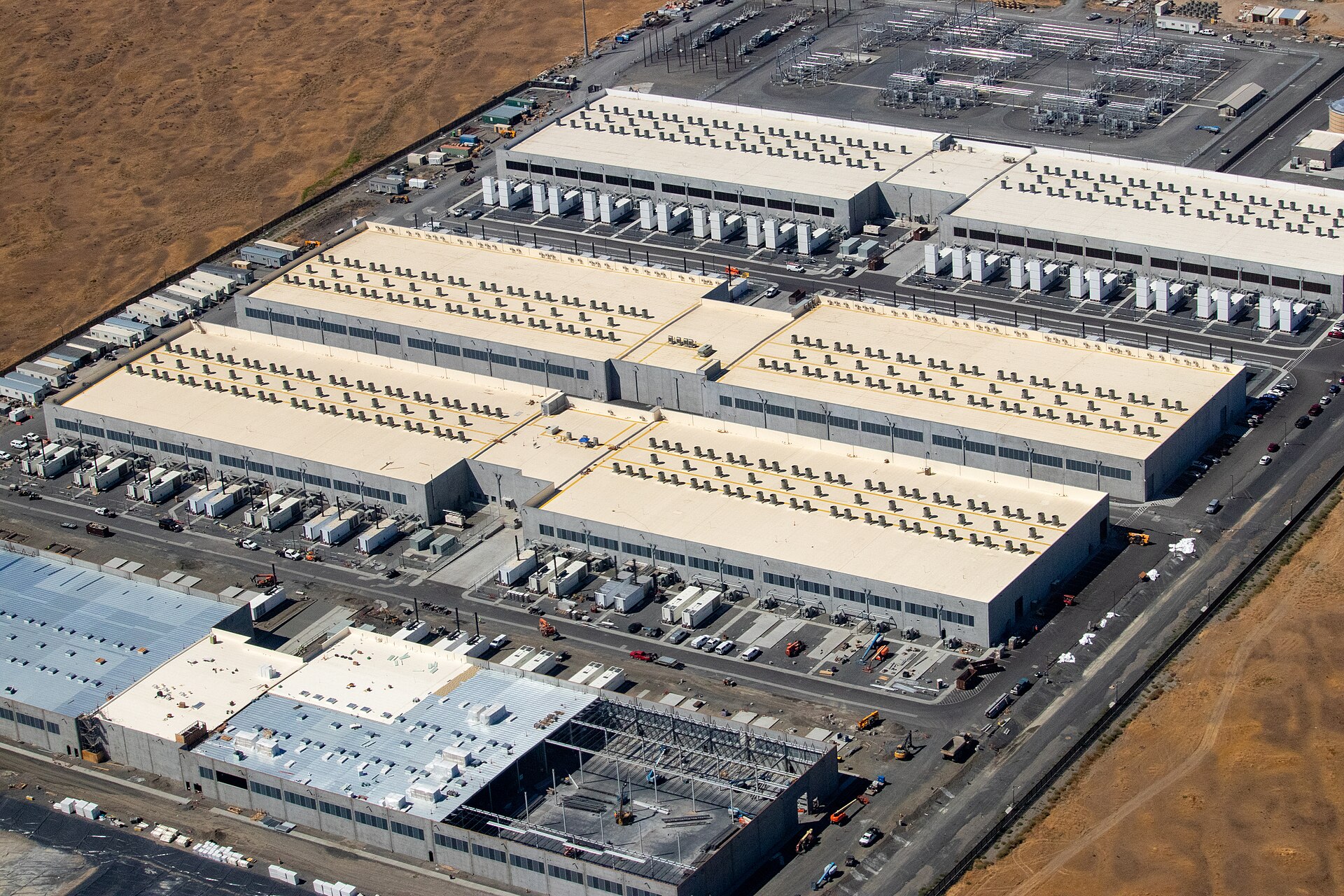
Image: Amazon AWS us-west-2 morrow east AZ 01.jpg by Tedder, CC BY-SA 4.0, via Wikimedia Commons. Illustrative photo; it does not show the events described.


