Reuters: Amazon Internal Document Outlines ‘World Product Graph’ Plan to Compile Global Product Data

Reuters reported on 13 November 2026 that Amazon has drafted an internal plan, called World Product Graph, to collect data on virtually every item for sale worldwide, whether or not Amazon stocks it. Reuters says its account rests on an internal Amazon document it reviewed and on people familiar with the matter. Reuters says it could not determine whether or when the plan will be carried out. Amazon told Reuters that draft, outdated documents often paint an incomplete picture.
What the document describes
According to Reuters, the document is a “PR/FAQ”, an internal format that pairs a press release with frequently asked questions. Reuters says it is typically a six-page narrative memo that sets out the case for a new product or service, and that not all PR/FAQs lead to a service. The people Reuters spoke to said the plan could be modified or dropped for financial or other reasons. The document gives an aspirational release date of 1 October 2027. Reuters could not determine whether that date is realistic, and says one of the people described Amazon as moving staff internally to start the project. Per Reuters, the project sits in Amazon’s Selection & Catalog Systems unit and is organised under Robert Tekiela, a vice president in that division, who did not respond to a request for comment.
- Data sources: Reuters says the document describes the plan as depending on how brands organise their products on their own websites. That would involve some brands and retailers contributing product data to Amazon continuously, and Amazon crawling other retailers’ websites on its own. Reuters could not determine how Amazon would crawl those sites or whether it would need permission in every case.
- Partners: Reuters reports that, according to the document, Amazon has already signed up Coca-Cola and Bayer, among others, to contribute product data, and has held a CEO-level summit with Procter & Gamble for a trial. Reuters says the companies did not respond to requests for comment.
- Existing services: Reuters says employees describe the project as an expansion of Amazon’s Buy for Me and Shop Direct services, which list products sold on other sites and let customers buy them through Amazon.
AI shopping agents
Reuters reports, citing people familiar with the matter, that the project would also help counter AI shopping agents, which are programs that complete shopping tasks for users. Those people said Amazon executives are wary that such agents may send customers to other sites that have more complete data. They said a larger store of product data could lead agents to look for products on Amazon.com rather than on other retailers’ sites.
Reuters says Meta’s Muse agent has had more than 10 million users in the US and Canada since it launched in September, and that Amazon blocked Muse from its retail site the same month. It adds that Amazon sued the AI company Perplexity last year over similar access, and that the case is still ongoing. Reuters also reports that Chief Executive Andy Jassy, on the third-quarter earnings call, played down the effect of agents, saying few customers shop this way yet and that Amazon’s advertising business has been minimally affected.
Amazon’s search assistant
The document also assesses Amazon’s own AI search tool, Rufus, which Amazon began calling Alexa for Shopping in May. Reuters says the document states that many Rufus answers are factually wrong or incomplete, that users run about 83 million Rufus searches a week, and that running them is expensive. Per the document, more data would let Amazon use less costly models. Amazon told Reuters that the usage figures in the document are significantly outdated and that its data shows Alexa for Shopping is roughly 97% accurate globally. Reuters reports Jassy said Alexa for Shopping has been used by more than 400 million people in the past year.
Amazon’s statement
Amazon gave Reuters this statement: “Draft, outdated documents often paint an incomplete picture and the existence of a brainstorming document such as this one doesn’t necessarily reflect our current plans.” It continued: “We’re constantly working on new ideas and technologies to make Amazon’s product catalog comprehensive, accurate, and helpful for customers.”
Sources and notes
Source: Reuters, 13 November 2026. The reuters.com page returned an HTTP 401 response to an automated request and could not be opened. Lens read the full Reuters text as republished by the Jerusalem Post, which credits it to Reuters. Copies on Investing.com and FashionNetwork returned 403 and could not be opened. Search summaries from MLQ and AI Weekly matched the Reuters account but were not used as sources. Lens has not seen the internal Amazon document. Every description of it, including the 1 October 2027 date, the Coca-Cola, Bayer and Procter & Gamble references, the crawling plan and the Rufus figures, is Reuters’s reading and has not been independently confirmed. No second outlet has reported the document’s contents independently; other sites repeat the Reuters account. The Reuters story also includes comments from an investment bank and a technology executive, which Lens does not repeat.
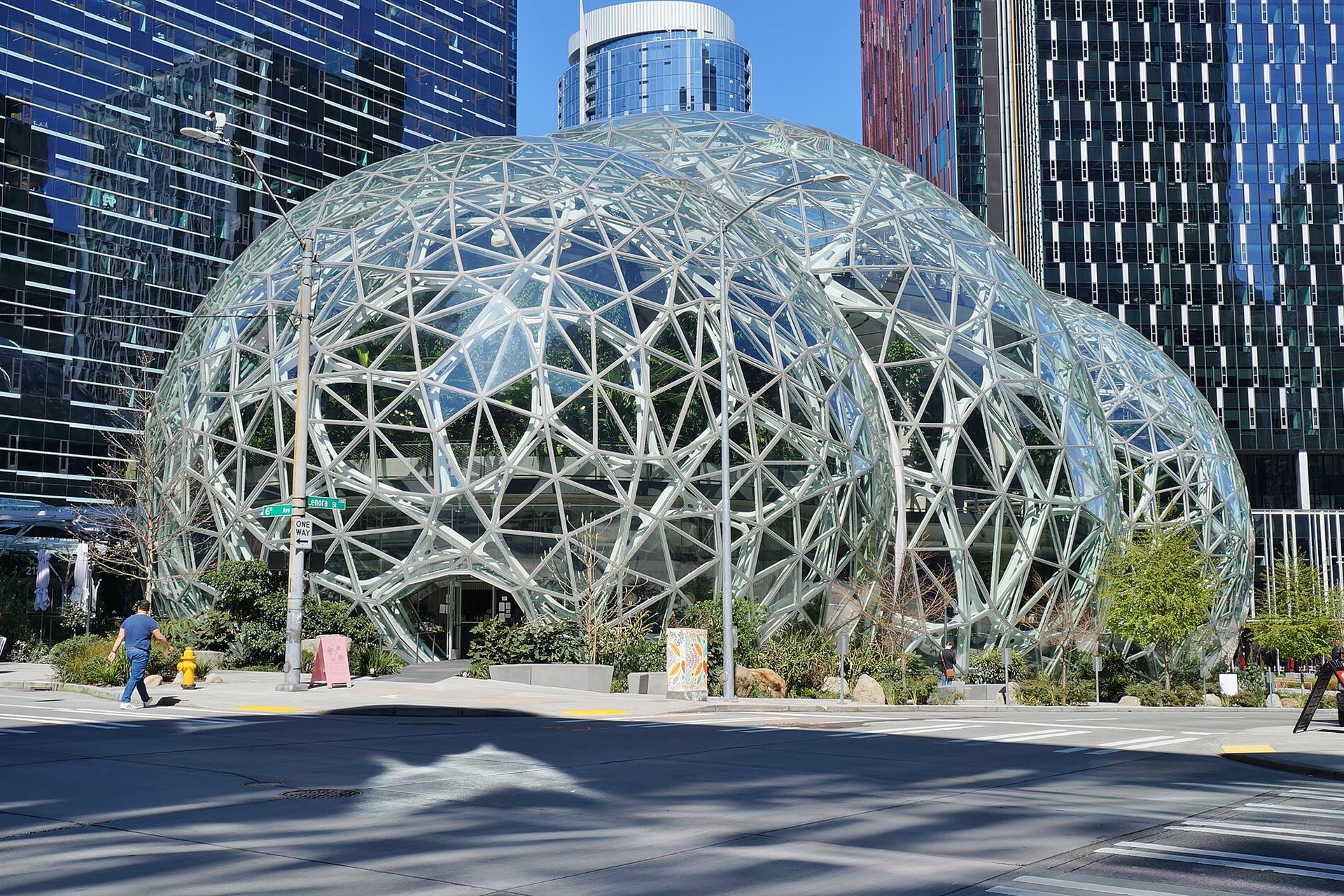
Image: The Amazon Spheres on Amazon's headquarters campus in Seattle, seen from 6th Avenue, 9 April 2020. Photo: SounderBruce (CC BY-SA 4.0), via Wikimedia Commons. Stand-in image: not a photo of the World Product Graph project or of Amazon's product data systems.